01What is hysteria today?
The word «hysteria» is old; today the condition is called conversion disorder or functional neurological disorder. Neurological symptoms appear, such as weakness or paralysis in a limb, seizure-like attacks, or loss of voice or vision, while neurological tests are normal. It's often linked to stress or trauma. Read about the symptoms of hysteria.
02Elements of treatment
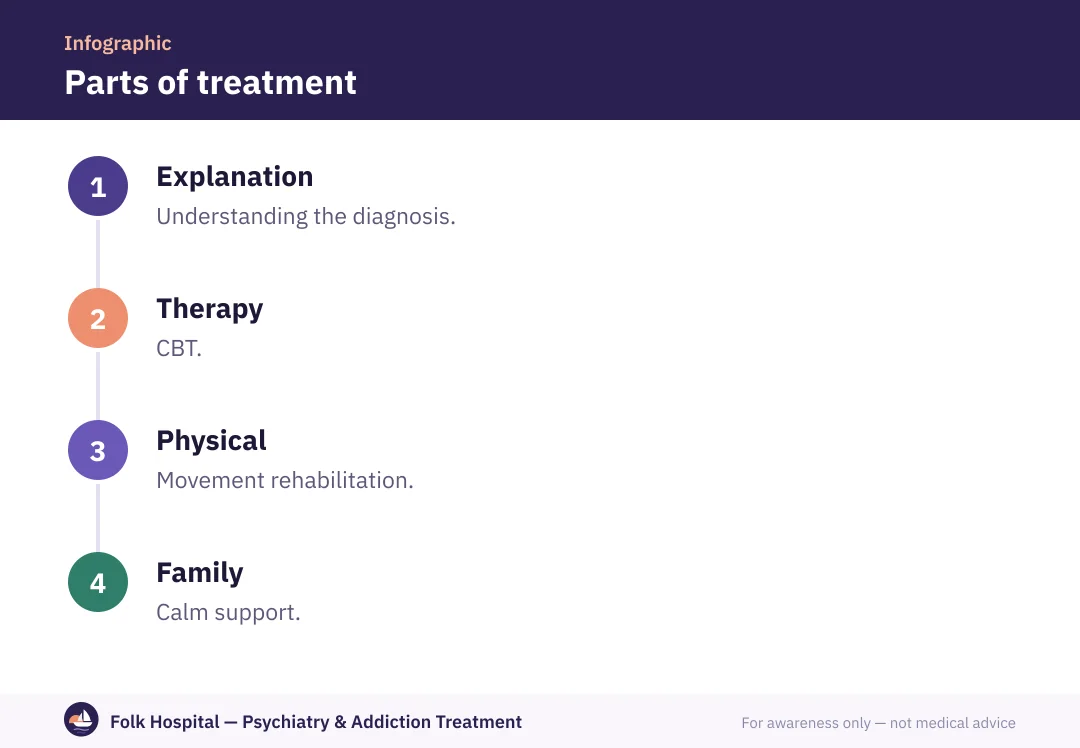
- Assessment and ruling out physical causeswith a neurological examination and suitable tests.
- Explaining the diagnosisclearly and respectfully, including that the symptoms are real and can improve.
- Cognitive behavioural therapyto understand triggers and ways of handling episodes.
- Physiotherapy and rehabilitationto retrain movement and function gradually.
- Treating accompanying problemsanxiety, depression and psychological trauma.
03The family's role
Worsens symptoms
Helps improvement
- Accusing them of acting or seeking attention | Acknowledging the suffering is real
- Crowding and great alarm during an episode | Calm, and making the area safe
- Constant focus on symptoms | Encouraging a return to daily activity
04Recovery
Many patients improve fully, especially if treatment starts early and symptoms are recent. Learning to manage stress and treating anxiety reduce recurrence. Read about cognitive behavioural therapy and anxiety treatment.
Don't assume the diagnosis
Any sudden weakness or seizure needs a medical assessment first to rule out stroke or epilepsy, before it's considered functional. Ambulance 123.
؟Frequently asked questions
Is conversion disorder curable?
Yes. Many patients improve fully, especially with early diagnosis and treatment.
Is the patient acting out the symptoms?
No. The symptoms happen unintentionally and aren't under the patient's control; they come from a problem in how the nervous system works, linked to psychological stress.
How should the family behave during an episode?
Calmly, making the area safe, without shouting or crowding, then offering support without over-focusing on the symptoms or accusing them of acting.
Does the patient need medicines?
There's no medicine for conversion symptoms themselves, but medicines are used for accompanying anxiety or depression when needed.
Sources and references
- Dissociative disorders — NHS (UK)
- Psychotherapies — National Institute of Mental Health (NIMH)
- Post-Traumatic Stress Disorder — National Institute of Mental Health (NIMH)
- Anxiety Disorders — National Institute of Mental Health (NIMH)

A psychiatrist specialising in addiction and mental illness in adults and adolescents, with a focus on dual diagnosis.
For awareness only — not a substitute for medical advice. Editorial policy · View profile