01What are the physical signs of meth use?
Signs on the body
- Rapid, obvious weight loss.
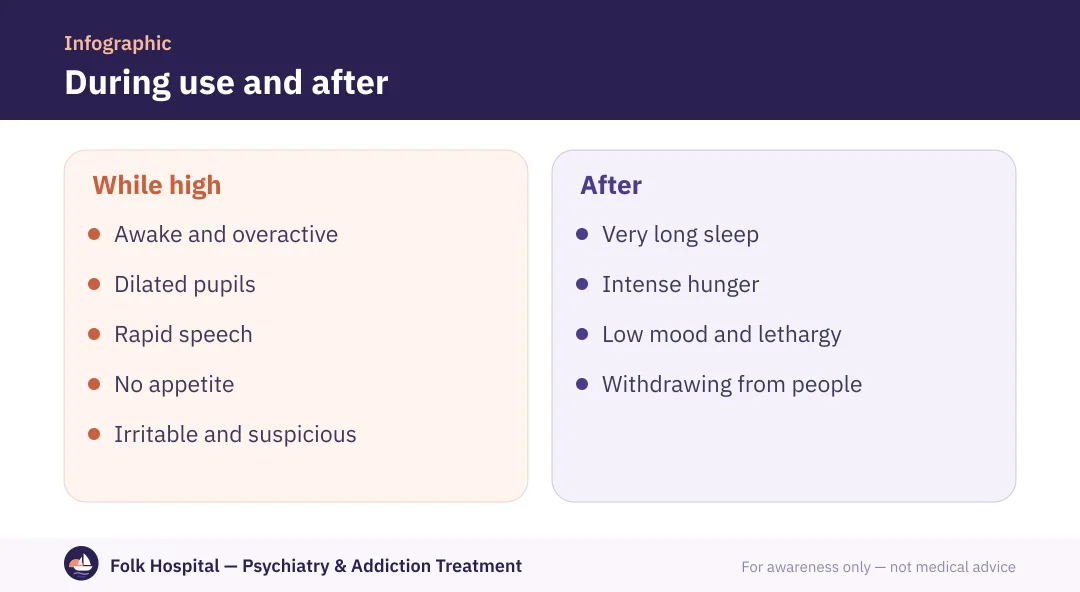
- Dilated pupils and tired-looking eyes.
- Constant skin picking with sores or spots on the face and arms.
- Decaying, damaged teeth and a dry mouth.
- Sweating and raised body temperature.
- Small burns on fingers or lips from the pipe.
02What are the behavioural and psychological signs?
Changes in behaviour
- Staying up for two or three days, then sleeping for many hours.
- Hyperactivity and pointless repetitive tasks (taking devices apart, for example).
- Severe irritability and outbursts of anger.
- Suspicion of family or neighbours and feeling watched.
- Hearing or seeing things that aren't there.
- Neglecting work or study and money going missing.
03What items might point to meth?
Small glass pipes with a bulb at one end, sometimes blackened, lots of lighters, small bags with traces of clear crystals, and sometimes mirrors or rolled paper for snorting.
04What are the danger signs?
- Chest pain or severe palpitations.
- Very high temperature or seizures.
- Aggression or threats to hurt someone.
- Hallucinations or paranoia driving dangerous behaviour.
Call an ambulance on 123; in cases of violence call the police on 122 and get away from danger.
Ambulance: 123؟Frequently asked questions
Can someone on meth be dangerous to their family?
During psychosis or intense paranoia they can become aggressive. If you feel unsafe, move away and get help immediately; don't try to confront them alone.
How can I be sure my son is using meth?
Several signs together, plus items such as glass pipes, raise suspicion. A urine test usually detects it within days of use. See how long meth stays in the body.
Sources and references
- Methamphetamine — research topic — National Institute on Drug Abuse (NIDA)
- Drugs, Brains, and Behavior: The Science of Addiction — National Institute on Drug Abuse (NIDA)

A psychiatrist specialising in addiction and mental illness in adults and adolescents, with a focus on dual diagnosis.
For awareness only — not a substitute for medical advice. Editorial policy · View profile