01The biosocial model
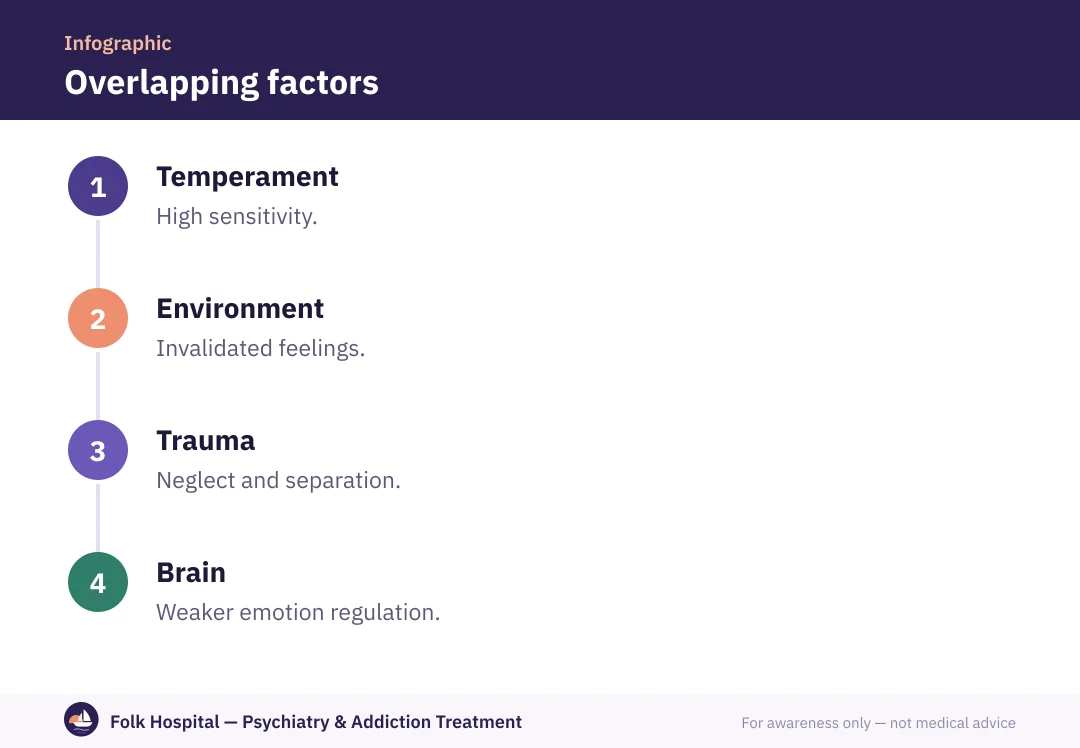
- Innate sensitivityemotions that are faster, stronger and slower to settle.
- An invalidating environment«you're overreacting», or punishment for expressing feelings.
- Not learning regulationthe child doesn't learn to name and calm emotions.
- Substitute strategiesimpulsivity, self-harm or intense clinging to relieve pain.
- A lasting patternclearly visible in adolescence and early adulthood.
02Risk factors
| Factor | Role |
|---|---|
| Genes | Vulnerability to impulsivity and emotional sensitivity |
| Trauma | Abuse, neglect or loss of a parent |
| Emotional invalidation | Not respecting a child's feelings |
| Family instability | Conflict, frequent moves, or a parent's addiction |
| Bullying and rejection | At school or in early relationships |
03What happens in the brain?
Emotion centres such as the amygdala are more reactive, while control and calming areas at the front of the brain regulate them less efficiently. The result is feelings that flare fast and settle slowly. Psychotherapy, especially dialectical behaviour therapy, trains these skills.
- Suicidal thoughts or plans, or self-harm.
- Taking a large dose of a medicine or substance.
- Intense anger with risk to self or others.
Mental health hotline: 08008880700.
Ambulance: 123Read borderline personality, its symptoms and emotional trauma.
؟Frequently asked questions
What causes borderline personality disorder?
A mix of innate emotional sensitivity and genes with an upbringing involving invalidation, trauma, neglect or instability.
Does trauma cause borderline personality disorder?
Childhood trauma is common among patients and raises risk, but not every patient experienced trauma, and not everyone with trauma develops it.
What does emotional invalidation mean?
Telling a child their feelings are wrong or exaggerated, or punishing them for feelings, so they don't learn to understand and regulate them.
Is it hereditary?
Genes contribute to vulnerability, especially impulsivity and emotional sensitivity, but aren't the only cause.
Is the family to blame?
The family is sometimes part of the picture, but the disorder results from many factors; blame doesn't help, while involving the family in treatment does.
Can it be prevented?
An environment that respects a child's feelings and teaches regulation, and early intervention when symptoms appear in adolescence, reduce risk.
Sources and references
- Borderline Personality Disorder — National Institute of Mental Health (NIMH)
- Personality disorder — NHS (UK)
- Psychotherapies — National Institute of Mental Health (NIMH)

A psychiatrist specialising in addiction and mental illness in adults and adolescents, with a focus on dual diagnosis.
For awareness only — not a substitute for medical advice. Editorial policy · View profile