01Symptoms and timing
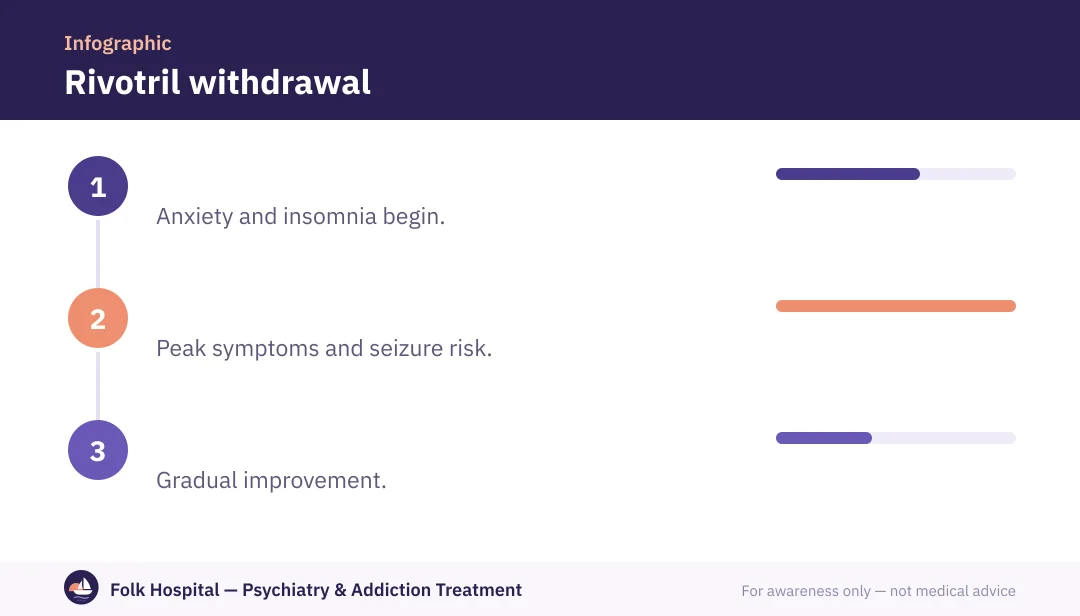
| Time | Symptoms |
|---|---|
| Two days to a week | Anxiety, insomnia, irritability, tremor and sweating |
| First weeks | Sensitivity to light and sound, confusion and seizure risk with sudden stopping |
| Later weeks | Milder anxiety and insomnia |
02Safe reduction
- Assessmentreason for use (epilepsy, anxiety, misuse), dose and duration.
- Slow reductionsmall steps over weeks.
- Treating the original causealternatives for anxiety or epilepsy depending on the case.
- Follow-upto adjust the pace.
- Seizures, severe confusion, hallucinations, or slow breathing when mixed with other substances.
Read about Rivotril addiction treatment, benzodiazepine withdrawal and the symptoms of Rivotril use.
؟Frequently asked questions
How long does a Rivotril taper take?
Usually weeks to months depending on the dose and duration. Slow tapering is more comfortable and safer.
I use Rivotril for epilepsy. Should I stop it?
Never stop it without your neurologist, because stopping can cause severe seizures.
Why is its withdrawal delayed?
Because it stays in the body a long time and its level falls slowly; a person may think they've got through withdrawal, then symptoms appear days later.
Does Rivotril cause addiction?
Yes. With long-term regular use, tolerance and dependence develop, and it's sometimes misused with other substances.
Sources and references
- Prescription Medicines — research topic — National Institute on Drug Abuse (NIDA)
- Treatment Approaches for Drug Addiction — DrugFacts — National Institute on Drug Abuse (NIDA)
- Anxiety Disorders — National Institute of Mental Health (NIMH)

A psychiatrist specialising in addiction and mental illness in adults and adolescents, with a focus on dual diagnosis.
For awareness only — not a substitute for medical advice. Editorial policy · View profile