Rivotril is useful for epilepsy and some panic cases, but long-term use without a plan leads to dependence.
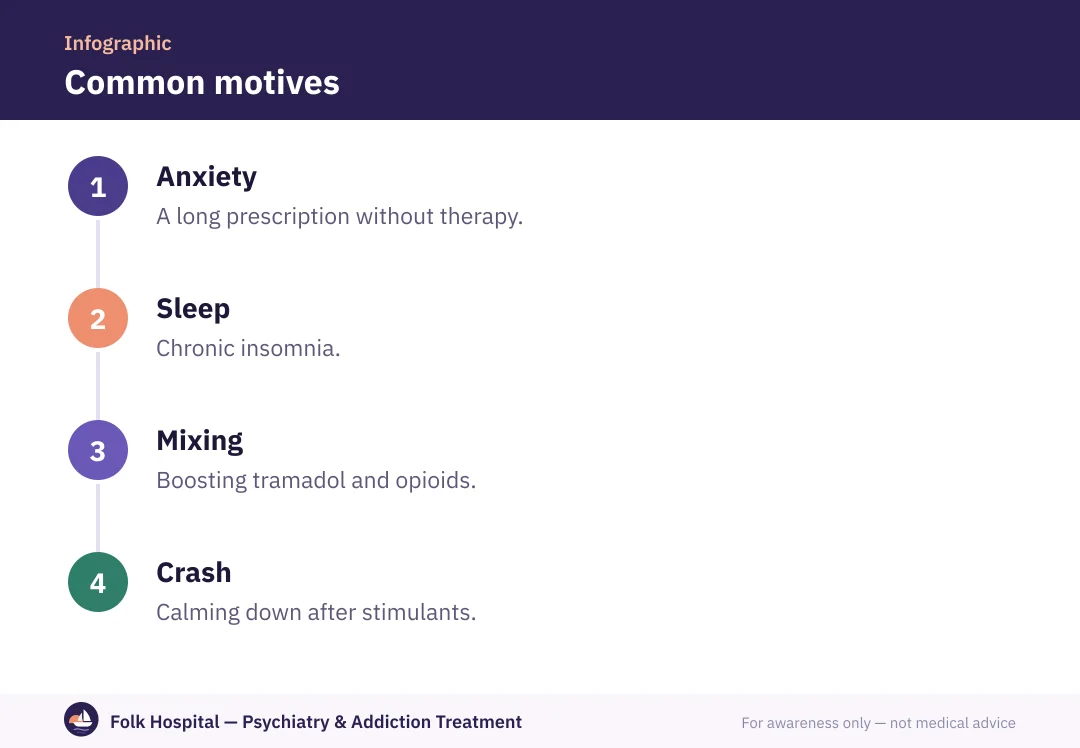
01Factors that raise the risk of addiction
| Factor | How it contributes |
|---|---|
| Anxiety and panic | Long prescriptions without psychological therapy |
| Insomnia | Relying on it for sleep |
| Mixing | Boosting tramadol or pregabalin |
| Easy access | Getting it without a prescription |
| Stress | Escaping tension |
Having a risk factor doesn't make addiction inevitable, and lacking one doesn't guarantee protection; addiction is an illness with many causes, and it can be treated.
02How does use turn into addiction?
With long-term use tolerance develops and rebound anxiety appears when delayed, so the person continues the medicine out of fear of symptoms.
03What protects?
- Treating anxiety, depression and insomnia early and safely.
- Supportive relationships and open conversation in the family.
- Healthy ways of coping with stress and pain.
- Seeking help at the first signs of losing control.
- A clear plan with the doctor for how long sedatives are used.
Read about Rivotril symptoms, its withdrawal, its treatment.
؟Frequently asked questions
Why do young people mix Rivotril with tramadol?
They believe it boosts and prolongs the calm, but it suppresses breathing and doubles the risk of overdose and dependence on two substances.
Do people with epilepsy become addicted to Rivotril?
Physical dependence can occur, but monitored medical use differs from addiction, and it shouldn't be stopped without a doctor.
What's the alternative for anxiety?
CBT and some antidepressants that don't cause dependence.
Sources and references
- Prescription Medicines — research topic — National Institute on Drug Abuse (NIDA)
- Anxiety Disorders — National Institute of Mental Health (NIMH)

A psychiatrist specialising in addiction and mental illness in adults and adolescents, with a focus on dual diagnosis.
For awareness only — not a substitute for medical advice. Editorial policy · View profile