01Signs
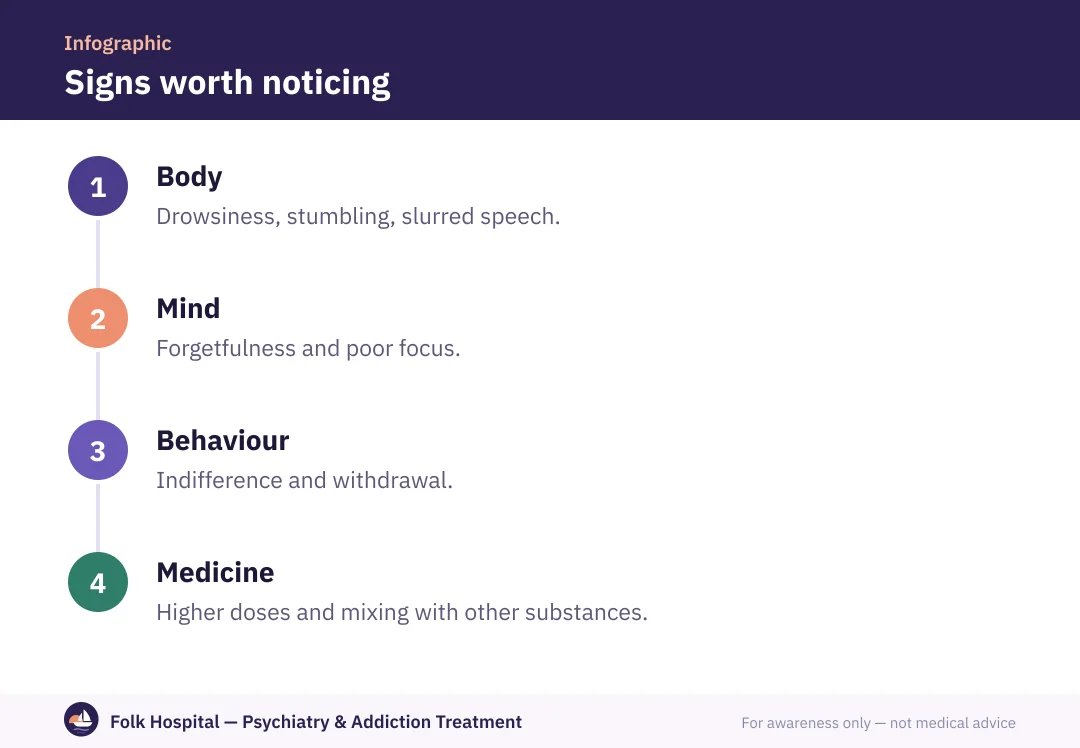
| Type | Signs |
|---|---|
| Under the effect | Drowsiness and lethargy, slurred speech, unsteadiness and apathy |
| Cognitive | Weak memory and concentration, forgetting events |
| Signs of dependence | Increasing the dose, mixing with other substances, running out early, multiple prescriptions |
| When it's missing | Anxiety, insomnia, tremor, irritability and sensitivity to light and sound |
02Danger signs
Call an ambulance on 123 for
- Deep drowsiness or slow breathing, especially with tramadol, pregabalin or alcohol.
- Seizures after stopping.
What to do right nowAmbulance: 123
03What should you do?
Don't stop it suddenly, and suggest an assessment to set a slow reduction plan. Read about Rivotril withdrawal, its treatment and its harms.
؟Frequently asked questions
My son takes Rivotril with tramadol. Is that dangerous?
Yes, a real danger to breathing. He needs a medical assessment and a safe plan to stop both.
Why is Rivotril mixed with tramadol or pregabalin?
To strengthen the effect or ease another substance's effects, but this mixing raises the risk of slowed breathing and overdose.
Is Rivotril only for epilepsy?
It's prescribed for epilepsy and some panic cases, but it's misused as a sedative.
Does it show up in a test?
It may show on a benzodiazepine test, and lab confirmation is more precise.
Sources and references
- Prescription Medicines — research topic — National Institute on Drug Abuse (NIDA)
- Drugs, Brains, and Behavior: The Science of Addiction — National Institute on Drug Abuse (NIDA)

Written byDr. Mahmoud ElsawyConsultant in psychiatry and addiction treatment
A psychiatrist specialising in addiction and mental illness in adults and adolescents, with a focus on dual diagnosis.
For awareness only — not a substitute for medical advice. Editorial policy · View profile