01Symptoms and timing
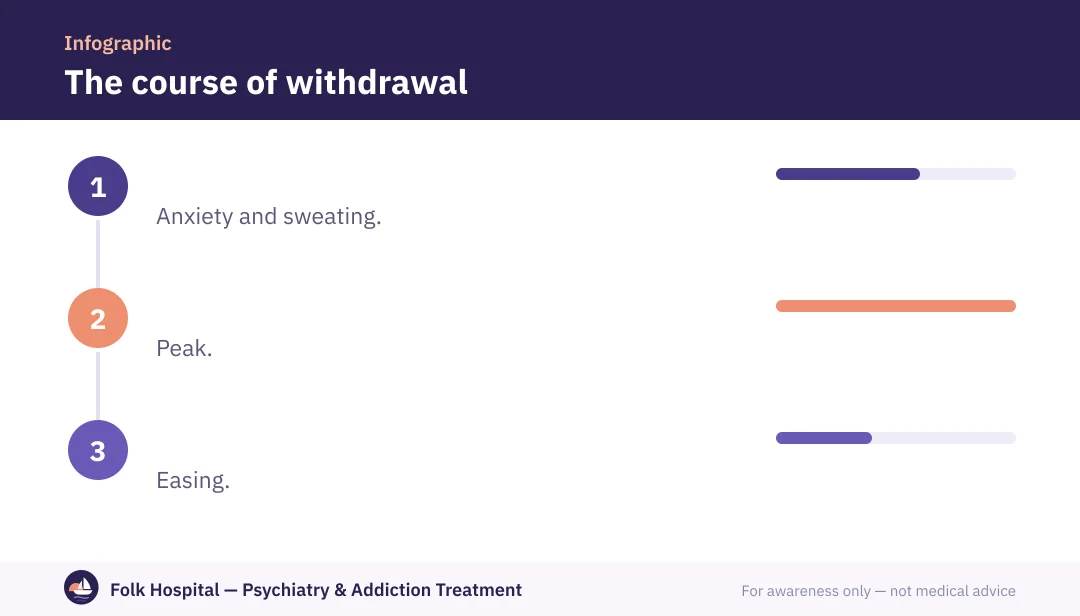
| Time | Symptoms |
|---|---|
| Within hours | Anxiety, sweating, runny nose and yawning |
| One to two days | Peak: muscle aches, diarrhoea, insomnia and intense cravings |
| Within days | Physical symptoms ease |
| Weeks | Milder insomnia, anxiety and cravings |
02Safe detox
- A confidential assessmentdoses, route of use and other substances.
- Supporting medicinesto ease symptoms.
- Caring for injection sitesand viral tests when needed.
- Psychological therapyto understand reasons for use and prevent relapse.
- A return-to-work planespecially for healthcare workers.
- Slow breathing or unresponsiveness, seizures, or severe tremor after repeated doses.
Read about pethidine addiction treatment, the symptoms of its use and its harms.
؟Frequently asked questions
Is pethidine withdrawal dangerous?
Usually not life-threatening, but draining, and the bigger danger is going back to a high dose.
Why is pethidine misuse seen among some healthcare workers?
Because access is sometimes easier. That makes early detection and confidential treatment important to protect the person and their patients.
Is pethidine more dangerous than morphine?
It has particular risks: with repeated doses a by-product builds up that can cause tremor and seizures, especially with weak kidneys.
How long does insomnia last after stopping?
It may continue for days to weeks after physical symptoms, improving with treatment and organised sleep.
Sources and references
- Opioids — research topic — National Institute on Drug Abuse (NIDA)
- Opiate and opioid withdrawal — U.S. National Library of Medicine — MedlinePlus
- Prescription Medicines — research topic — National Institute on Drug Abuse (NIDA)

A psychiatrist specialising in addiction and mental illness in adults and adolescents, with a focus on dual diagnosis.
For awareness only — not a substitute for medical advice. Editorial policy · View profile