01Signs
| Type | Signs |
|---|---|
| Under the effect | Drowsiness, dizziness, small pupils, nausea and calm |
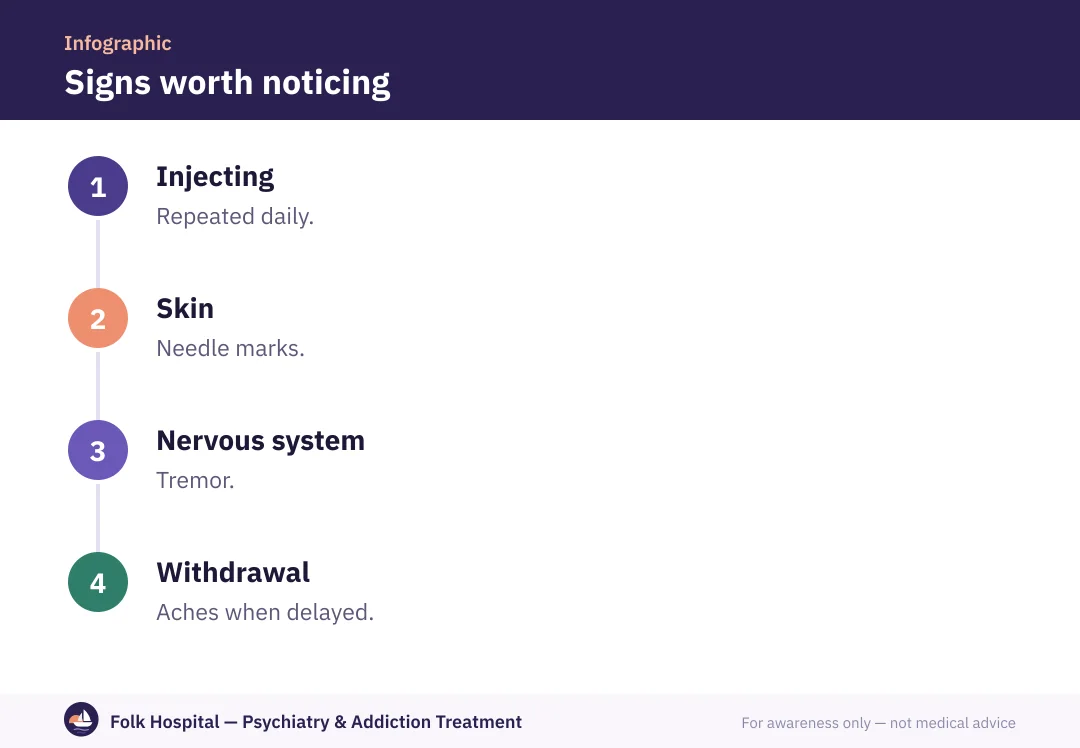
| Signs of addiction | Repeated injecting through the day, needle marks, long sleeves, and sometimes missing ampoules at work |
| With repeated doses | Tremor, agitation and sometimes seizures |
| When it's missing | Anxiety, sweating, runny nose, aches and intense cravings within hours |
02Danger signs
- Slow breathing or unresponsiveness.
- Seizures or severe tremor.
- Fever and agitation after mixing with other medicines.
03What should you do?
Talk confidentially and respectfully, and suggest an assessment and confidential treatment. Read about pethidine withdrawal, its treatment and its harms.
؟Frequently asked questions
A colleague who handles medicines shows strange signs. What should I do?
Follow your workplace policy for confidential reporting; the aim is to protect them and patients and direct them to treatment.
Why does someone using pethidine need repeated injections?
Because its effect is short, so the person injects several times a day to avoid withdrawal.
What's the danger of mixing it with some medicines?
Mixing it with certain antidepressants can cause dangerous fever, agitation and rigidity, so it shouldn't be taken with other medicines without a doctor.
Is there confidential treatment for healthcare workers?
Yes. Confidential treatment is possible and aims to protect the person and return them safely to work.
Sources and references
- Opioids — research topic — National Institute on Drug Abuse (NIDA)
- Prescription Medicines — research topic — National Institute on Drug Abuse (NIDA)

A psychiatrist specialising in addiction and mental illness in adults and adolescents, with a focus on dual diagnosis.
For awareness only — not a substitute for medical advice. Editorial policy · View profile