01Harms
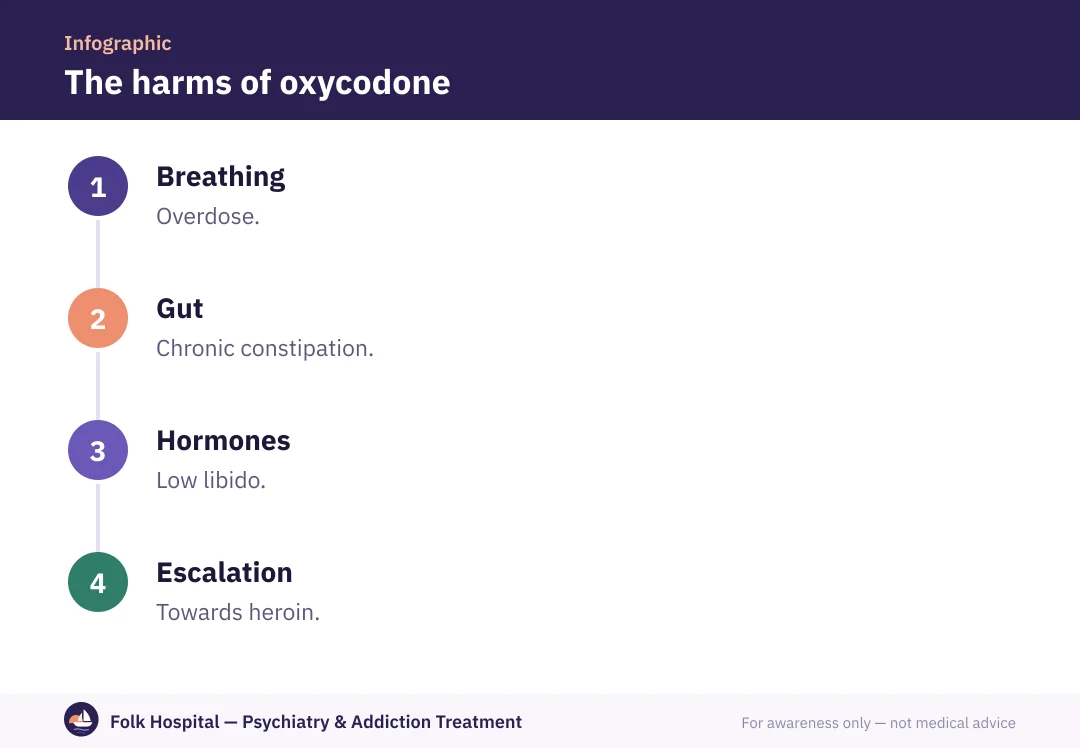
| Area | Harms |
|---|---|
| Breathing | Slowed and stopped breathing with overdose |
| Digestion | Constipation and nausea |
| Liver | Damage from high doses of paracetamol combinations |
| Dependence | Tolerance, withdrawal and addiction |
| Counterfeits | Fake pills that may contain fentanyl |
| Hormones | Lower sex drive |
- Unresponsiveness, slow breathing, or pinpoint pupils and blue lips.
02Treatment
A plan with the doctor to reduce the painkiller and treat pain with alternatives, or supervised detox where there's addiction. Read about oxycodone symptoms, opioid addiction treatment and prescription drug addiction.
؟Frequently asked questions
Why do some painkiller users turn to heroin?
Because dependence continues after the prescription stops, and heroin is sometimes cheaper and easier; it's a dangerous path that a gradual stopping plan can prevent.
Can addiction start from a prescription?
Yes, which is why strong painkillers are prescribed for the shortest possible time with follow-up, and the need for them reviewed regularly.
What's the danger of counterfeit pills?
Some pills sold outside pharmacies may contain fentanyl, which is deadly.
Does oxycodone harm the liver?
Some preparations combine it with paracetamol, and high doses of these can damage the liver.
Sources and references
- Opioids — research topic — National Institute on Drug Abuse (NIDA)
- Prescription Medicines — research topic — National Institute on Drug Abuse (NIDA)
- Opioid overdose — fact sheet — World Health Organization

A psychiatrist specialising in addiction and mental illness in adults and adolescents, with a focus on dual diagnosis.
For awareness only — not a substitute for medical advice. Editorial policy · View profile