01Signs
| Type | Signs |
|---|---|
| Under the effect | Drowsiness, small pupils, calm and slow speech |
| Physical | Constipation, itching, nausea and slow breathing |
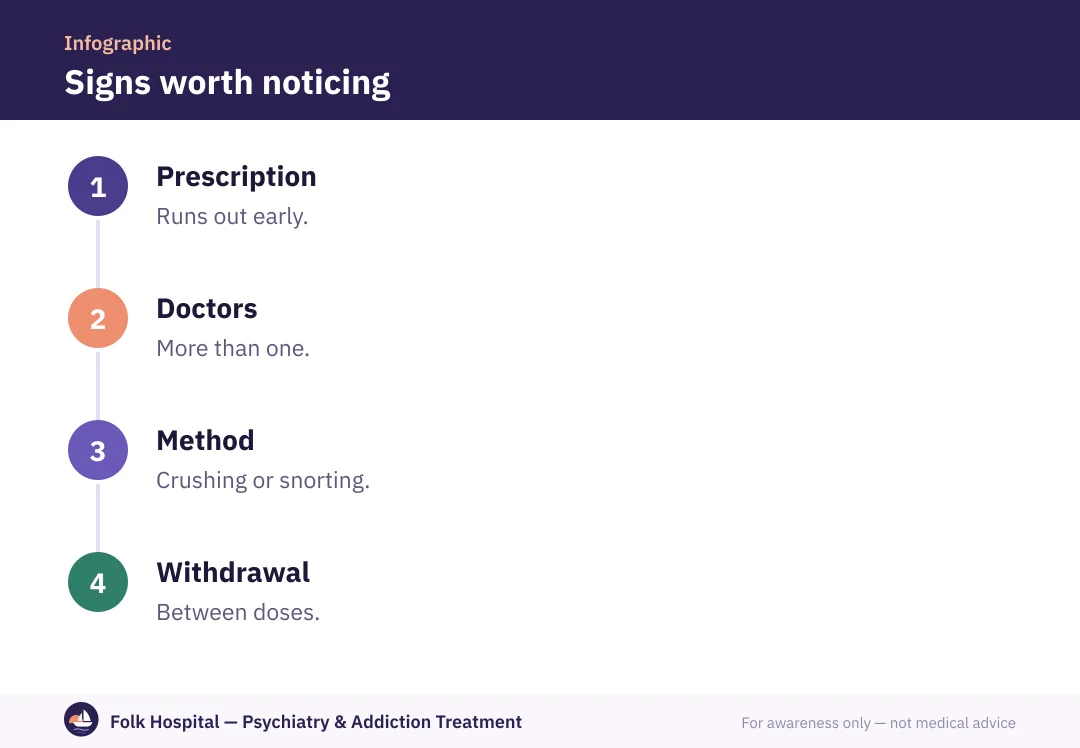
| Signs of addiction | Running out of prescriptions early, doctor shopping, and crushing, snorting or injecting pills |
| When it's missing | Anxiety, sweating, runny nose, aches, diarrhoea and intense cravings |
02Signs of overdose
- Unresponsiveness.
- Slow or stopped breathing.
- Pinpoint pupils and blue lips.
03What should you do?
Don't stop a prescribed painkiller suddenly; talk to the doctor about a safe plan and alternatives for pain. Read about the harms of oxycodone, opioid addiction treatment and prescription drug addiction.
؟Frequently asked questions
I take the painkiller before the pain comes. Is that a problem?
It may be a sign of dependence. Discuss it with your doctor for a safe pain plan.
Why is crushing oxycodone tablets dangerous?
Because some are designed to release the medicine slowly, and crushing releases the full dose quickly, raising the risk of breathing stopping.
Can addiction start from a prescription?
Yes, especially with long-term use or increasing the dose without a doctor, which is why strong painkillers need follow-up.
What should I do if I find leftover tablets at home?
Store them securely or ask the pharmacist how to dispose of them safely.
Sources and references
- Opioids — research topic — National Institute on Drug Abuse (NIDA)
- Prescription Medicines — research topic — National Institute on Drug Abuse (NIDA)
- Opioid overdose — fact sheet — World Health Organization

A psychiatrist specialising in addiction and mental illness in adults and adolescents, with a focus on dual diagnosis.
For awareness only — not a substitute for medical advice. Editorial policy · View profile