01Symptoms and timing
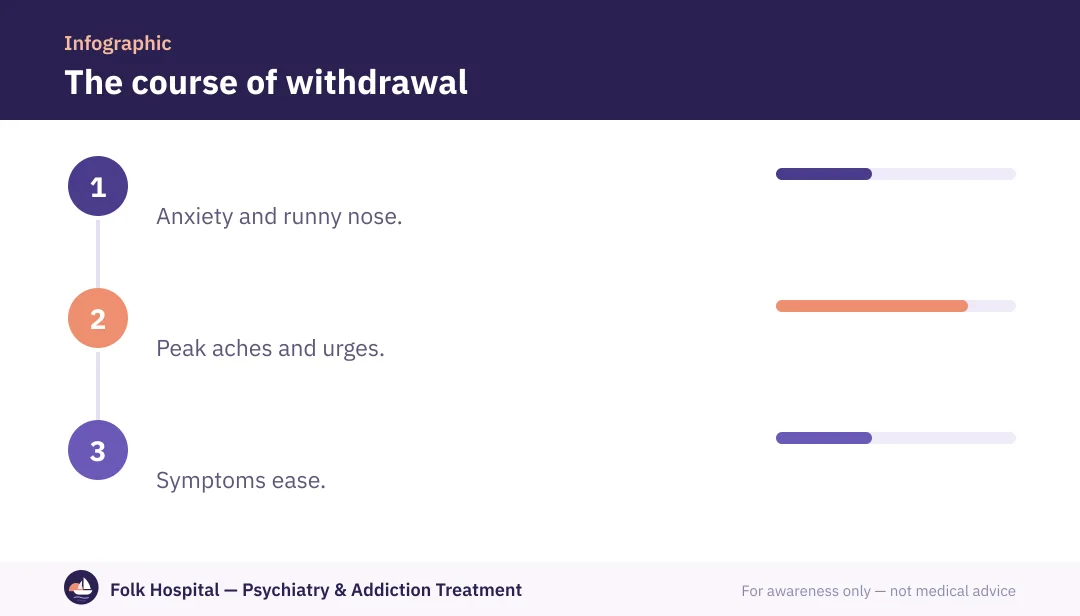
| Time | Symptoms |
|---|---|
| Hours to a day | Anxiety, insomnia, runny nose, sweating and yawning |
| Days two and three | Peak: muscle aches, diarrhoea, chills and an intense urge to inject |
| Within a week | Physical symptoms ease |
02Safe detox
- Assessmentdoses, injection sites and other substances.
- Detox with supporting medicinesto ease symptoms.
- Caring for injection sitestreating any inflammation or abscess.
- Testsfor hepatitis viruses and HIV.
- Psychological therapyto prevent a return to injecting.
- Redness, swelling and pain at an injection site with fever, or slow breathing after mixing with other substances: ambulance 123.
Read about nalbuphine addiction treatment, the symptoms of nalbuphine use and the harms of injecting.
؟Frequently asked questions
Is nalbuphine withdrawal dangerous?
Usually not life-threatening, but it's draining, and the urge to go back to injecting is strong.
Is nalbuphine less addictive than others?
It's sometimes described as lower risk, but misuse through repeated injection causes real dependence and withdrawal.
What are the risks of injecting?
Inflammation and abscesses at injection sites, vein damage, and the risk of hepatitis viruses and HIV when sharing needles.
Do I need tests after stopping?
Yes. Tests for hepatitis and HIV are recommended for anyone who has injected, especially with shared equipment.
Sources and references
- Opioids — research topic — National Institute on Drug Abuse (NIDA)
- Opiate and opioid withdrawal — U.S. National Library of Medicine — MedlinePlus
- Treatment Approaches for Drug Addiction — DrugFacts — National Institute on Drug Abuse (NIDA)

A psychiatrist specialising in addiction and mental illness in adults and adolescents, with a focus on dual diagnosis.
For awareness only — not a substitute for medical advice. Editorial policy · View profile