01Signs
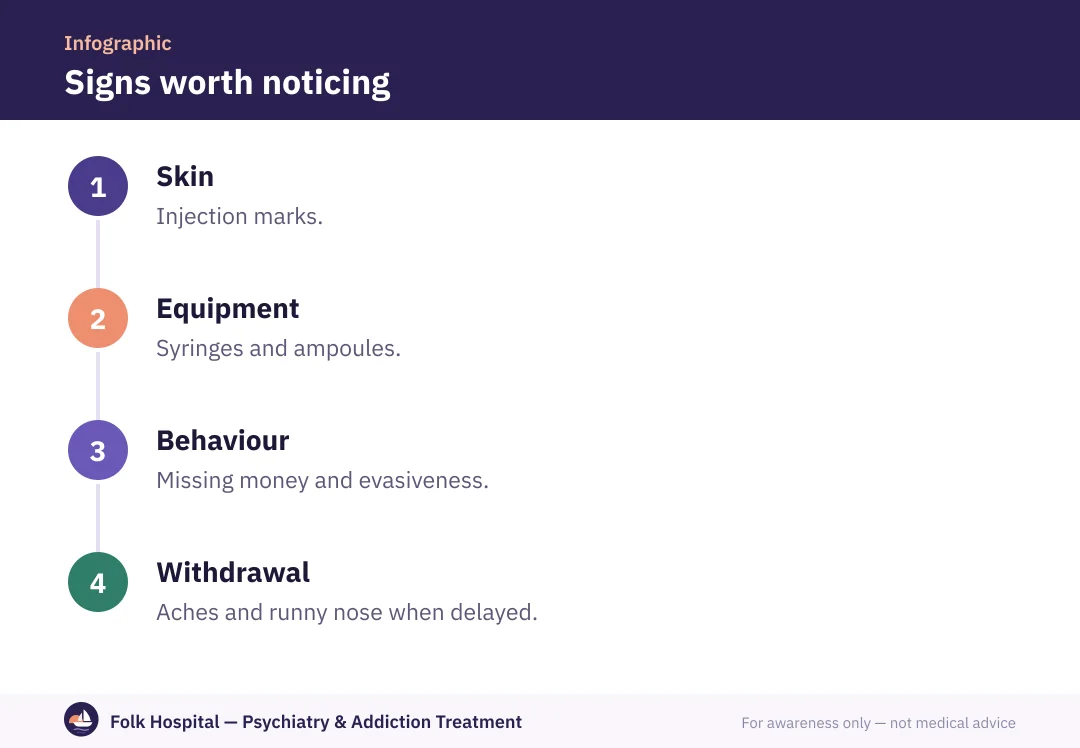
| Type | Signs |
|---|---|
| Under the effect | Drowsiness, dizziness, sweating, nausea and calm |
| Injection signs | Needle marks, bruises, swelling and always wearing long sleeves |
| At home | Syringes, empty ampoules and tourniquets |
| When it's missing | Anxiety, insomnia, runny nose, aches, diarrhoea and an intense urge to inject |
02Danger signs
- Redness, swelling and pain at an injection site with fever.
- Slow breathing or unresponsiveness after mixing with other substances.
Ambulance 123.
Ambulance: 12303What should you do?
Talk calmly and seek a medical assessment that includes injection sites and tests. Read about nalbuphine withdrawal, its treatment and the harms of injecting.
؟Frequently asked questions
I found Nubain ampoules with my son. What should I do?
Talk to him calmly without shouting, arrange a medical assessment and infection testing, and start a treatment plan.
Is nalbuphine misuse common in Egypt?
Yes. It's misused by injection among some young people and is known by various brand names.
What are the signs of injecting on the body?
Needle marks, bruises, dark lines along veins, swelling or abscesses, and always wearing long sleeves.
Does someone who injects need tests?
Yes. Tests for hepatitis viruses and HIV are important for anyone who has injected.
Sources and references
- Opioids — research topic — National Institute on Drug Abuse (NIDA)
- Prescription Medicines — research topic — National Institute on Drug Abuse (NIDA)

A psychiatrist specialising in addiction and mental illness in adults and adolescents, with a focus on dual diagnosis.
For awareness only — not a substitute for medical advice. Editorial policy · View profile