01Harms and risks
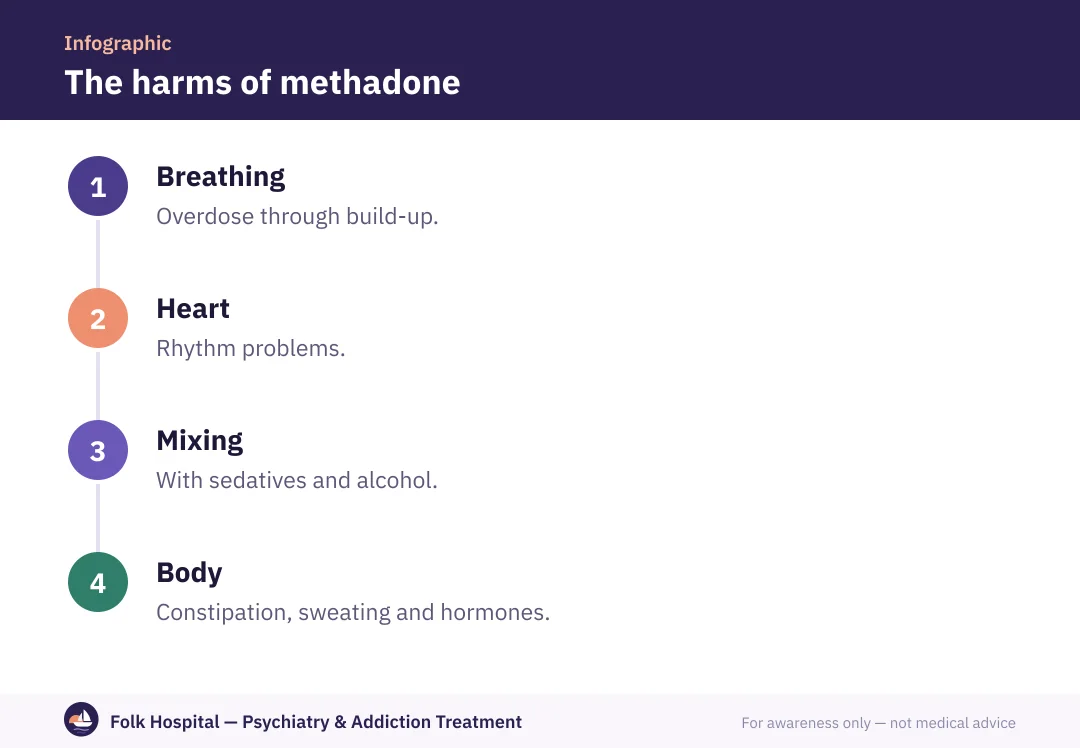
| Area | Risks |
|---|---|
| Breathing | Slowed breathing, especially at the start or when mixed |
| Heart | Rhythm disturbance in some patients |
| Digestion | Constipation and nausea |
| Mouth | Dryness and decay |
| Hormones | Lower sex drive and sweating |
| Non-medical use | Overdose from build-up and lack of supervision |
- Deep drowsiness, slow breathing, unresponsiveness, or fainting with palpitations.
02Safe use
Methadone is given within a treatment programme at measured doses with follow-up. Read about methadone withdrawal, how long it stays in the body and opioid addiction treatment.
؟Frequently asked questions
Why are the first weeks of methadone dangerous?
Because the drug builds up slowly, so a dose can seem right and then blood levels rise days later.
Why is methadone dangerous in the first days?
Because it builds up in the body, levels can rise gradually even on a steady dose, so the doctor starts low and monitors.
Does it affect the heart?
It can lengthen an interval on the heart tracing in some patients, especially at high doses or with other medicines, so ECG monitoring is used.
Does methadone harm the teeth?
It can cause a dry mouth that increases decay, so oral care matters.
Sources and references
- Medications to Treat Opioid Use Disorder — Research Report — National Institute on Drug Abuse (NIDA)
- Guidelines for the psychosocially assisted pharmacological treatment of opioid dependence — World Health Organization
- Opioid overdose — fact sheet — World Health Organization

A psychiatrist specialising in addiction and mental illness in adults and adolescents, with a focus on dual diagnosis.
For awareness only — not a substitute for medical advice. Editorial policy · View profile