
Methadone is a long-acting synthetic opioid, so it stays in the body for days and builds up with daily doses.
01Detection window by sample type
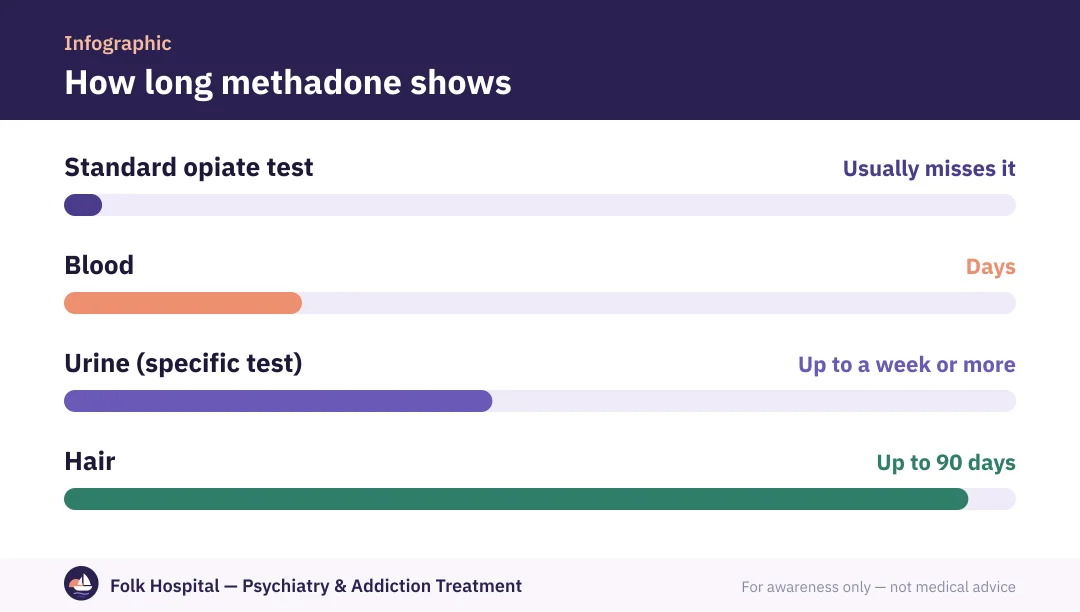
| Sample | Approximate window |
|---|---|
| Urine | Usually up to a week or more |
| Blood | Days |
| Saliva | Days |
| Hair | Up to about 90 days |
Times are approximate and vary from person to person; lab confirmation is the reference.
02Does it show on a standard test?
Usually not; it needs a methadone-specific strip, used by treatment programmes.
03What makes the window longer or shorter?
- Dose, frequency and length of use.
- Liver and kidney function.
- Age, weight and body fat.
- The type and sensitivity of the test.
There is no magic method
Detox drinks and drinking huge amounts of water don't speed up clearance and can be dangerous. Read about drug cleanse myths.
Read about methadone withdrawal, its harms, opioid addiction treatment.
؟Frequently asked questions
Does methadone show on an opiate test?
Usually not; it needs a specific test.
Why does methadone build up?
Because the body clears it slowly, so levels rise with consecutive doses in the first days.
Does methadone show up as heroin?
No. The standard opioid test doesn't detect it; it needs a specific test.
Sources and references
- Medications to Treat Opioid Use Disorder — Research Report — National Institute on Drug Abuse (NIDA)
- Drug Testing — U.S. National Library of Medicine — MedlinePlus

A psychiatrist specialising in addiction and mental illness in adults and adolescents, with a focus on dual diagnosis.
For awareness only — not a substitute for medical advice. Editorial policy · View profile