01Symptoms and timing
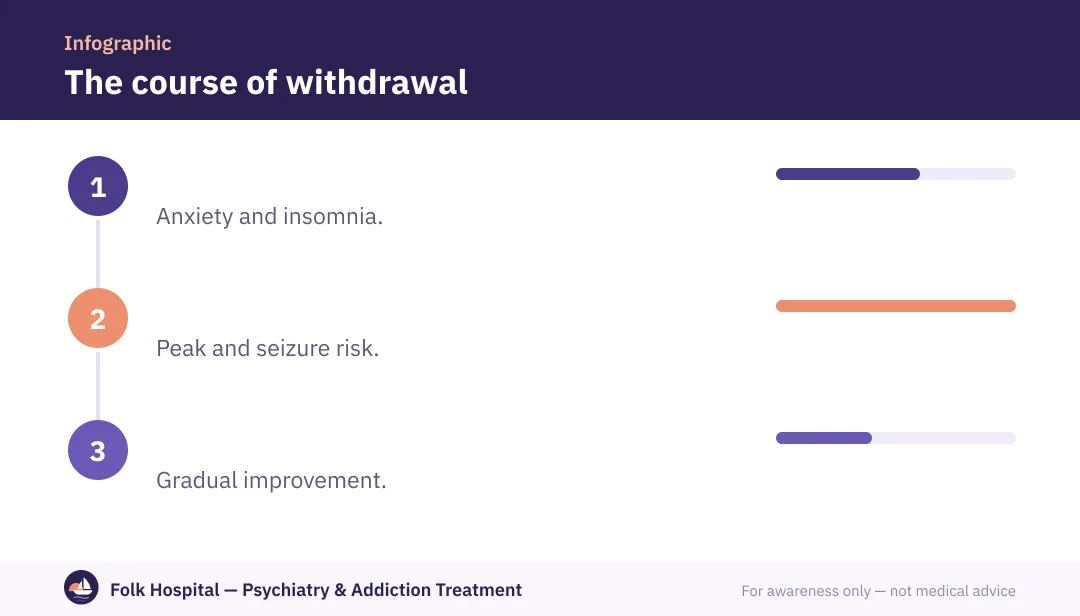
| Time | Symptoms |
|---|---|
| One to two days | Anxiety, insomnia, irritability, tremor and sweating |
| Following days | Peak: sensitivity to light and sound, panic, confusion and seizure risk with sudden stopping |
| Weeks | Milder anxiety and insomnia |
02Safe reduction
- Assessmentdose, duration and other substances.
- Gradual reductionor switching to a longer-acting type under supervision.
- Treating the original anxietywith alternatives that don't cause dependence.
- Sleep skillsto reduce rebound insomnia.
- Regular follow-upto adjust the plan.
Don't stop suddenly
- Especially with high doses or mixing with alcohol. For seizures or severe confusion: ambulance 123.
What to do right nowAmbulance: 123
Read about lorazepam addiction treatment, benzodiazepine withdrawal and the symptoms of lorazepam use.
؟Frequently asked questions
How long does a lorazepam taper take?
Usually weeks, longer with high doses and long use.
Does lorazepam cause addiction?
Yes. With regular long-term use or doses above those prescribed, tolerance and dependence develop.
Will the doctor switch it to another medicine during reduction?
Sometimes they switch to a longer-acting type to make reduction smoother, depending on the case.
What do I do about anxiety after stopping?
CBT and some antidepressants are effective alternatives that don't cause dependence.
Sources and references
- Prescription Medicines — research topic — National Institute on Drug Abuse (NIDA)
- Treatment Approaches for Drug Addiction — DrugFacts — National Institute on Drug Abuse (NIDA)
- Anxiety Disorders — National Institute of Mental Health (NIMH)

Written byDr. Mahmoud ElsawyConsultant in psychiatry and addiction treatment
A psychiatrist specialising in addiction and mental illness in adults and adolescents, with a focus on dual diagnosis.
For awareness only — not a substitute for medical advice. Editorial policy · View profile