01Signs
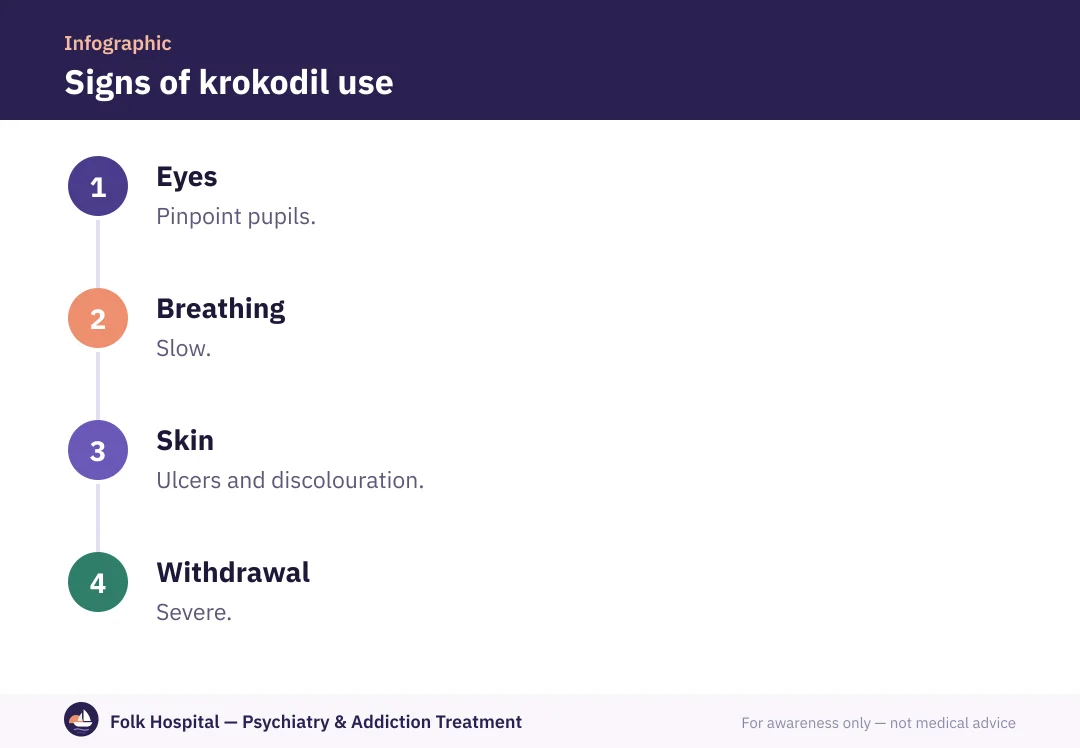
| Type | Signs |
|---|---|
| Under the effect | Drowsiness, pinpoint pupils, slow speech and slow breathing |
| Skin | Discolouration, ulcers, swelling and infection at injection sites |
| General | A chemical smell, weight loss and neglect |
| When it's missing | Opioid withdrawal: aches, diarrhoea, irritability and cravings |
02Danger signs
- Unresponsiveness or slow breathing.
- A spreading or blackened wound, or one with high fever.
- Severe pain and swelling in a limb.
03What should you do?
Don't delay. The wounds need urgent medical care, and the addiction needs supervised detox. Read about the harms of krokodil, the harms of injecting and opioid addiction treatment.
؟Frequently asked questions
What should I do about an ulcerated injection wound?
Go to the emergency department immediately; infection and tissue death can threaten a limb or life.
Why is it called krokodil?
Because the skin at injection sites changes colour and scales in a way that resembles crocodile skin.
Is krokodil common in Egypt?
There's no data showing wide spread, but knowing about it matters because injecting any home-made substance carries similar risks.
Can the wounds be treated?
They need urgent medical care and may need surgery, along with treatment of the addiction itself.
Sources and references
- Opioids — research topic — National Institute on Drug Abuse (NIDA)
- Drugs, Brains, and Behavior: The Science of Addiction — National Institute on Drug Abuse (NIDA)

A psychiatrist specialising in addiction and mental illness in adults and adolescents, with a focus on dual diagnosis.
For awareness only — not a substitute for medical advice. Editorial policy · View profile