01Why is it so hard to stop cocaine?
Cocaine is a short-acting stimulant that raises dopamine in the brain quickly, giving a feeling of confidence, energy and happiness for minutes before dropping suddenly. That drop pushes the person to another dose, then another, in binges that can last hours. With repetition the brain strongly links cocaine with certain places, people and feelings, so craving itself becomes the core problem, more than physical withdrawal.
That's why cocaine treatment works when it focuses on behaviour, triggers and rebuilding daily life, not on medicines alone.
02What are the stages of treatment?
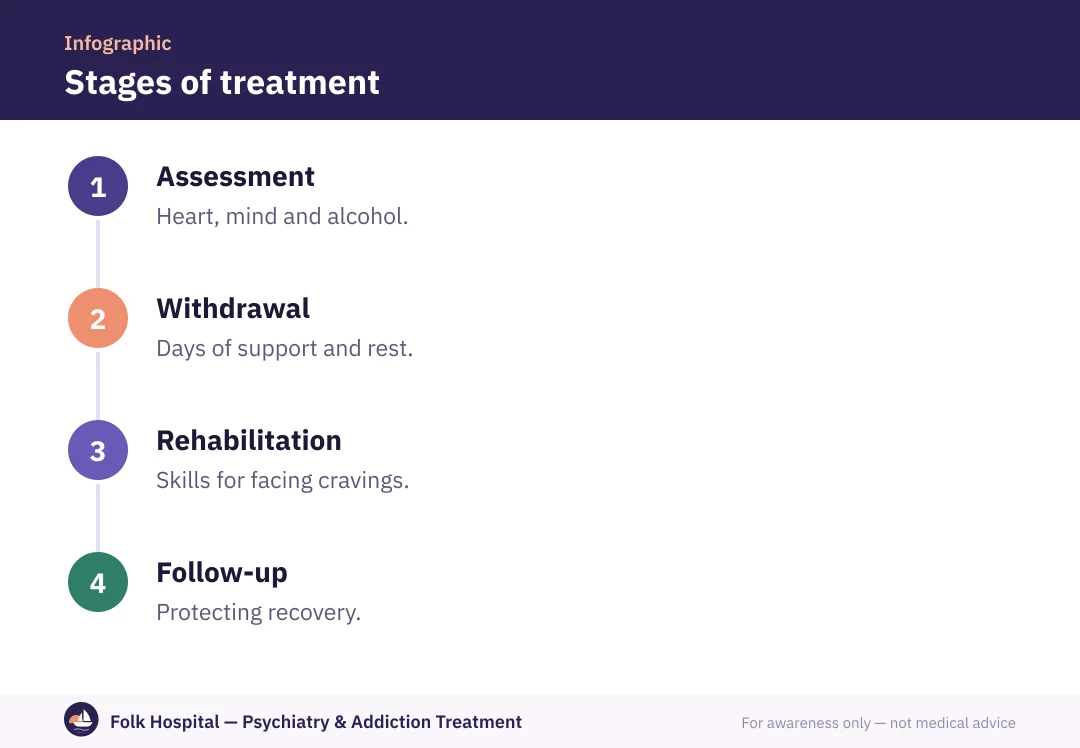
We start by assessing the heart, blood pressure and mental health, then help the person through the first days, then work on skills for facing cravings and changing routines.
- Assessmentamount and route (snorting or smoking crack), alcohol or other drugs, heart and blood pressure checks, and mental state and suicide risk.
- Getting through withdrawalrest, nutrition and sleep, with medicines for insomnia, anxiety and low mood when needed, and mood monitoring. Read about cocaine withdrawal.
- Behavioural treatmentcognitive behavioural therapy, contingency management and training for high-risk situations.
- Treating what accompanies itdepression, anxiety, ADHD or alcohol addiction.
- Follow-upsessions, regular testing and a relapse-prevention plan for at least a year.
03Withdrawal: the crash, then the cravings
| Stage | Approximate timing | What happens |
|---|---|---|
| The crash | Hours to days | Severe exhaustion, long sleep, hunger, low mood and anxiety |
| Withdrawal | Weeks one and two | Strong cravings, mood swings, poor concentration, loss of pleasure |
| Protracted phase | Weeks to months | Intermittent cravings set off by triggers, gradual improvement in mood |
Physical withdrawal usually isn't dangerous, but low mood can be deep and sudden, so we monitor suicide risk, especially in the first days.
04The heart comes first
Cocaine and the heart
Cocaine raises blood pressure, speeds up the heart and constricts arteries, and can cause a heart attack or dangerous rhythm problems even in young people with no previous illness. Mixing it with alcohol produces a substance in the body that adds to the damage to the heart and liver. Any chest pain, breathlessness or strong palpitations after use needs emergency care immediately on 123.
So the assessment includes blood pressure and an ECG when needed, and we follow up any heart problem with a cardiologist. Read about the harms of cocaine.
05Behavioural treatment: what actually works?
Reviews by the US National Institute on Drug Abuse point to these as the most effective approaches for cocaine addiction:
- Contingency management: agreed, tangible rewards for negative tests and attending sessions. Simple, but among the most powerful approaches in stimulant addiction.
- Cognitive behavioural therapy: identifying triggers (nights out, money, certain friends, stress), learning to refuse, and riding out cravings until they pass.
- The community reinforcement approach: rebuilding a life with work, relationships and enjoyable activities that compete with cocaine.
- Family therapy: repairing trust and setting limits on money and late nights.
06Are there medicines?
There's still no approved medicine specifically for cocaine addiction, and several are being studied without clear results. But the doctor uses medicines for accompanying symptoms: insomnia, anxiety, depression and ADHD if present, avoiding addictive medicines. If there's co-existing alcohol addiction, it's treated with its approved medicines. Read alcohol addiction treatment.
07Cocaine and crack
Crack is a smoked form of cocaine that reaches the brain within seconds, giving a shorter high, stronger cravings and faster dependence. Treatment for crack rests on the same principles but usually needs a more intensive programme or a residential stay at first.
08Residential or outpatient?
Outpatient care may be enough
- Occasional use at social events.
- Little alcohol or other drug use.
- No severe depression or thoughts of self-harm.
- Supportive work and family.
Residential care is better with
- Repeated binges lasting days.
- Smoking crack, or mixing alcohol and sedatives.
- Severe depression or suicidal thoughts.
- Heart problems or failed previous attempts.
09Money, work and confidentiality
Many people with cocaine addiction work in sensitive jobs and fear anyone finding out. Treatment with us is fully confidential, and we schedule appointments to protect their work. One of the most important relapse-prevention tools is controlling money: reducing available cash, or having a trusted person help manage spending for a while, because having money to hand is one of the strongest triggers.
؟Frequently asked questions
Can cocaine addiction be treated as an outpatient?
In many cases yes, if the environment is supportive and there are no other drugs or severe depression. Otherwise a residential stay helps break the cycle.
Is there a medicine for cocaine addiction?
There's still no approved medicine specifically for cocaine addiction, and several are being studied. The doctor uses medicines for insomnia, depression and anxiety, and behavioural treatment remains the foundation.
How long does cocaine withdrawal last?
It starts with a crash within hours to days, with exhaustion, long sleep and low mood, then about two weeks of cravings and mood swings, and intermittent cravings can last weeks or months.
Does cocaine damage the heart?
Yes. It can raise blood pressure, disturb heart rhythm and constrict arteries, and even cause heart attacks in healthy young people. Any chest pain after use needs emergency care immediately.
How does treating crack differ from cocaine?
Crack is a smoked form that reaches the brain faster, causing quicker dependence and stronger cravings, but the principles of treatment are the same, often with a more intensive programme.
Why do I feel depressed after quitting cocaine?
Because the brain got used to the dopamine surges it causes and needs time to regain balance. It improves gradually, and we treat depression if it's severe or persistent.
Is treatment confidential?
Completely. Many people with cocaine addiction work in sensitive jobs, and we arrange the plan to protect their privacy and work.
Sources and references
- Cocaine — research topic — National Institute on Drug Abuse (NIDA)
- Treatment Approaches for Drug Addiction — DrugFacts — National Institute on Drug Abuse (NIDA)
- Drug misuse in over 16s: psychosocial interventions (CG51) — National Institute for Health and Care Excellence (NICE)
- Co-Occurring Disorders and Health Conditions — National Institute on Drug Abuse (NIDA)
- World Drug Report 2024 — United Nations Office on Drugs and Crime (UNODC)

A psychiatrist specialising in addiction and mental illness in adults and adolescents, with a focus on dual diagnosis.
For awareness only — not a substitute for medical advice. Editorial policy · View profile