01Harms
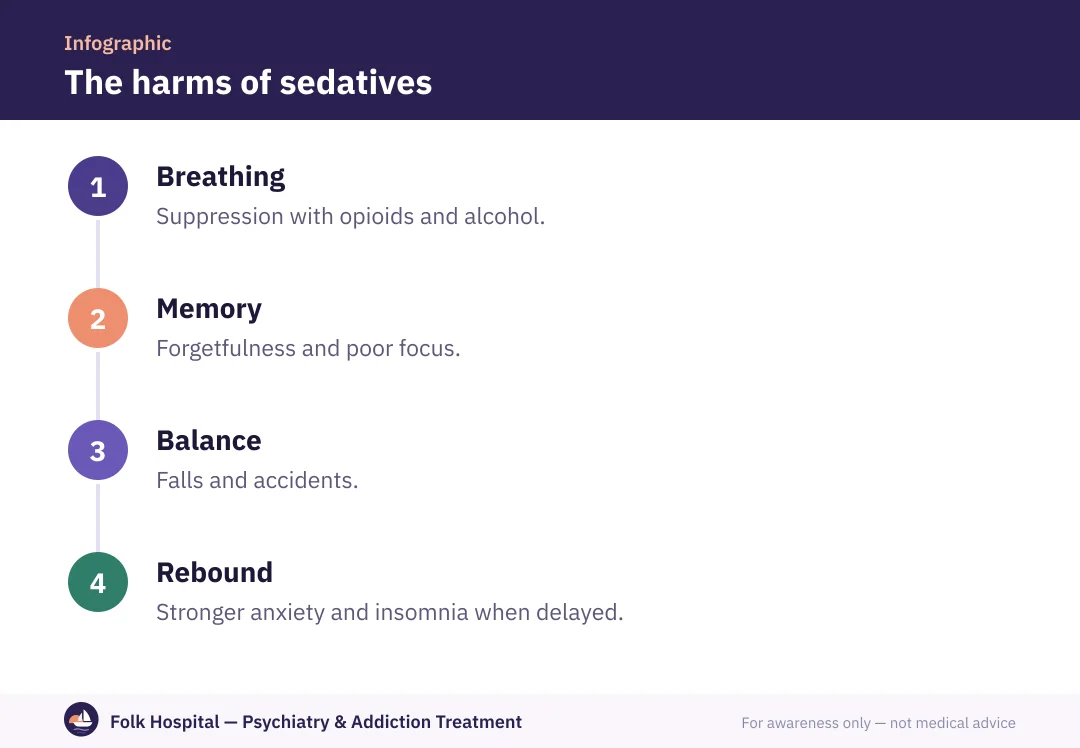
| Area | Harms |
|---|---|
| Memory and concentration | Forgetfulness, difficulty learning and slow thinking |
| Balance | Dizziness, falls and fractures, especially in older people |
| Mind | Apathy, mood swings and sometimes depression or impulsive behaviour |
| Dependence | Tolerance requiring higher doses, and withdrawal that can cause seizures |
| Accidents | Slow reactions when driving or working |
| Pregnancy | May affect the newborn and cause withdrawal symptoms |
- Mixing them with alcohol, tramadol, heroin or pregabalin can slow breathing until it stops. Ambulance 123. Read about the dangers of mixing.
02Can the harms improve?
Mostly yes, with gradual reduction and treating the original anxiety or insomnia with safe alternatives. Read about the symptoms of sedative use, their withdrawal and their treatment.
؟Frequently asked questions
Do sedatives cause dementia?
They can cause confusion and memory problems resembling dementia in older people, which usually improve with gradual tapering. A doctor assesses the situation.
Do sedatives permanently harm memory?
They can weaken memory and concentration during use, which usually improve after gradual stopping, though improvement may take time.
Are sedatives safe for older people?
They need great caution, as they raise the risk of falls and confusion, and the doctor may prefer alternatives.
Can I drive while using them?
They can slow reactions and raise accident risk, so take care and don't drive when drowsy.
Sources and references
- Prescription Medicines — research topic — National Institute on Drug Abuse (NIDA)
- Drugs, Brains, and Behavior: The Science of Addiction — National Institute on Drug Abuse (NIDA)
- Anxiety Disorders — National Institute of Mental Health (NIMH)

A psychiatrist specialising in addiction and mental illness in adults and adolescents, with a focus on dual diagnosis.
For awareness only — not a substitute for medical advice. Editorial policy · View profile