Detecting alcohol differs from other substances, because the body clears it at an almost constant rate, while some by-products stay longer and are used by labs to prove recent drinking.
01Detection window by sample type
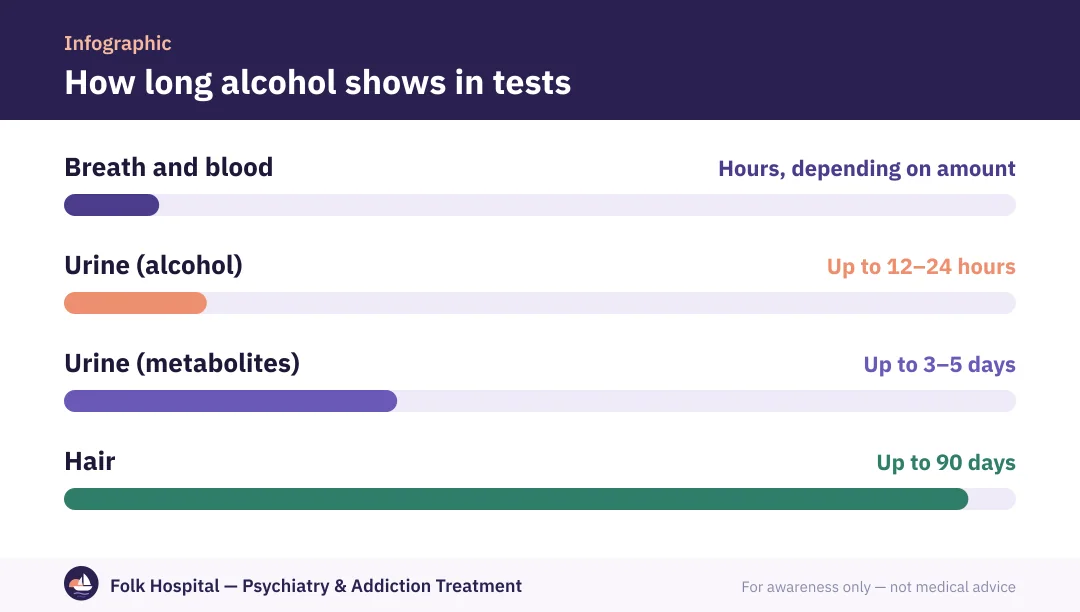
| Sample | Approximate window |
|---|---|
| Urine | Alcohol itself up to about 12–24 hours, by-products up to about 3–5 days |
| Blood | Hours, depending on amount |
| Saliva | Hours |
| Hair | By-products up to about 90 days |
Times are approximate and vary from person to person; lab confirmation is the reference.
02Does it show on a standard test?
Breath and blood tests measure current alcohol, while tests for alcohol by-products in urine or hair are ordered specifically to prove drinking over the past days or months.
03What makes the window longer or shorter?
- Dose, frequency and length of use.
- Liver and kidney function.
- Age, weight and body fat.
- The type and sensitivity of the test.
Heavy drinking means alcohol may still be in your blood the next morning, so you may be unfit to drive even if you feel sober.
There is no magic method
Detox drinks and drinking huge amounts of water don't speed up clearance and can be dangerous. Read about drug cleanse myths.
Read about alcohol withdrawal, its harms, alcohol addiction treatment, drug testing.
؟Frequently asked questions
Does sleeping clear alcohol from the body?
Sleep just passes the time. The liver works at the same pace, so blood alcohol can still be high the morning after heavy drinking.
Do coffee or a cold shower lower blood alcohol?
No. They may make you more alert, but only the liver clears alcohol, at its own steady rate.
Could I be over the driving limit the next morning?
Yes, after a night of heavy drinking, because alcohol can stay in the blood for many hours.
Sources and references
- Alcohol withdrawal — U.S. National Library of Medicine — MedlinePlus
- Drug Testing — U.S. National Library of Medicine — MedlinePlus
- Alcohol — research topic — National Institute on Drug Abuse (NIDA)

A psychiatrist specialising in addiction and mental illness in adults and adolescents, with a focus on dual diagnosis.
For awareness only — not a substitute for medical advice. Editorial policy · View profile