No one starts drinking intending to become addicted. Drinking turns into dependence when genetic, psychological and social factors combine with repeated drinking.
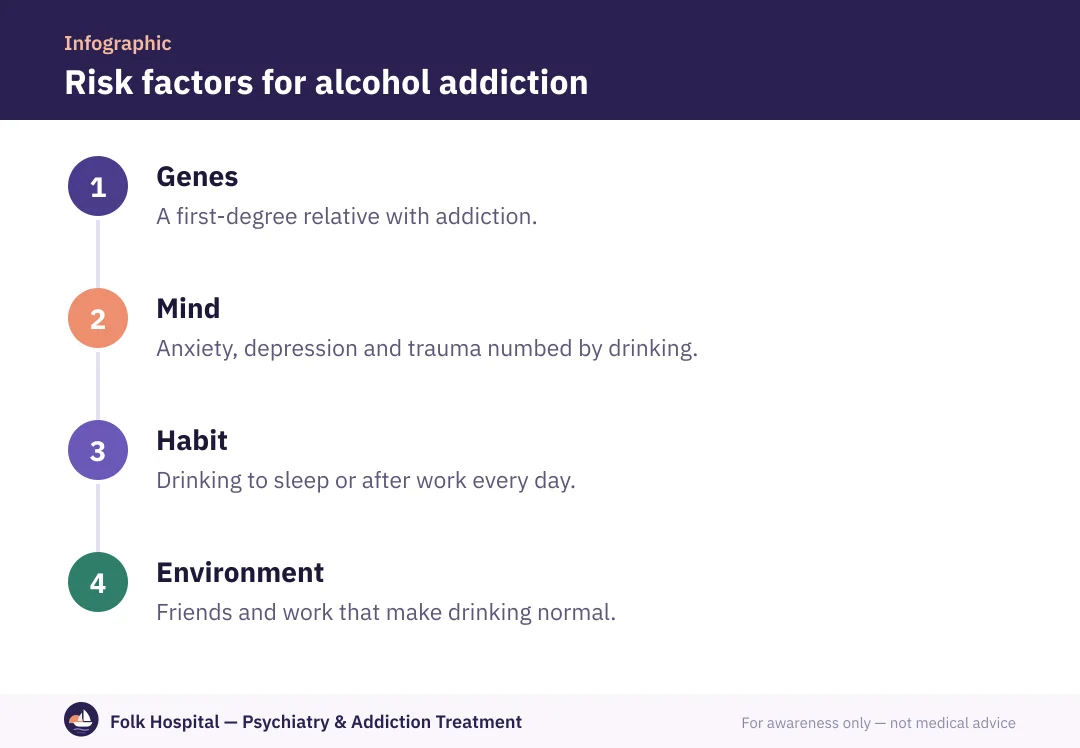
01Factors that raise the risk of addiction
| Factor | How it contributes |
|---|---|
| Genetics | Alcohol addiction in the family increases predisposition |
| Early start | Drinking in adolescence affects a still-developing brain |
| Anxiety, depression and trauma | Drinking to numb feelings entrenches the habit |
| Environment | Friends or work that normalise heavy drinking |
| Tolerance | Needing more to get the same effect |
Having a risk factor doesn't make addiction inevitable, and lacking one doesn't guarantee protection; addiction is an illness with many causes, and it can be treated.
02How does use turn into addiction?
With repetition the brain adapts to alcohol, so tolerance develops and then withdrawal appears on stopping, and the person drinks to avoid tremor and anxiety rather than for pleasure. At that point drinking becomes a necessity rather than a choice.
03What protects?
- Treating anxiety, depression and insomnia early and safely.
- Supportive relationships and open conversation in the family.
- Healthy ways of coping with stress and pain.
- Seeking help at the first signs of losing control.
Read about alcohol addiction symptoms, its harms, its treatment.
؟Frequently asked questions
I can handle more alcohol than my friends. Is that good?
No. High tolerance means your body has adapted, and it's one of the warning signs linked to later addiction.
Is alcohol addiction hereditary?
Genetics clearly increase predisposition but don't decide addiction; environment and behaviour determine a lot.
Does drinking to sleep cause addiction?
It can cause dependence and ruins sleep quality, and insomnia has better treatments.
Sources and references
- Alcohol — research topic — National Institute on Drug Abuse (NIDA)
- Alcohol — fact sheet — World Health Organization
- Drugs, Brains, and Behavior: The Science of Addiction — National Institute on Drug Abuse (NIDA)
- Alcohol — research topic — National Institute on Drug Abuse (NIDA)
- Alcohol — fact sheet — World Health Organization
- Drugs, Brains, and Behavior: The Science of Addiction — National Institute on Drug Abuse (NIDA)

A psychiatrist specialising in addiction and mental illness in adults and adolescents, with a focus on dual diagnosis.
For awareness only — not a substitute for medical advice. Editorial policy · View profile