01Why do we bite our nails?
Biting usually happens automatically with boredom, concentration or stress, and gives temporary relief, so it repeats until it becomes a habit. Read about the causes of nail biting.
02Habit reversal training
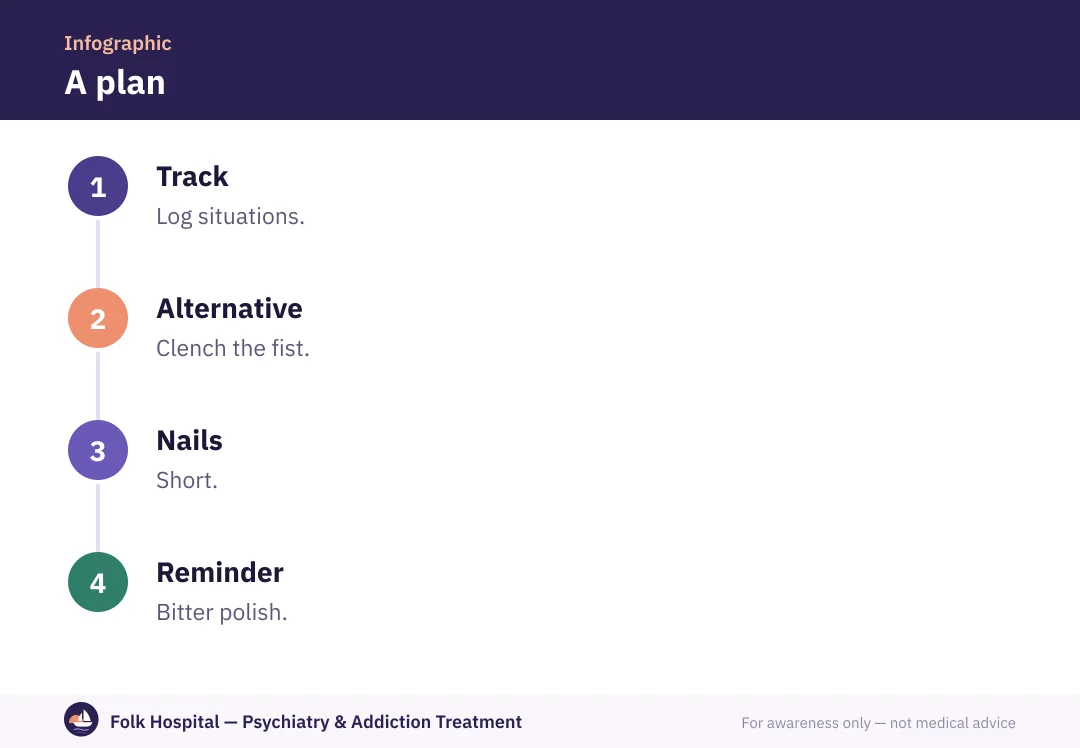
- Trackingrecord when biting happens: on screens? In exams? In crowds?
- Noticing the signalnotice the moment the hand approaches the mouth.
- An alternative responseclench your fist or hold something for a minute.
- Repetition and rewardcelebrate days without biting.
03Helpful tools
| Tool | Its role |
|---|---|
| Keeping nails short | Less to bite |
| Bitter polish | An instant taste reminder |
| A stress ball or hand toy | Keeps the hands busy |
| Nail care | Increases the wish to protect them |
04Stress behind the biting
If biting increases with anxiety, learning slow breathing, organising sleep and CBT help a lot. Read about anxiety and stress.
For parents
A child doesn't bite their nails out of stubbornness. A reminder with an agreed signal, praise for progress and keeping the hands busy work better than punishment or mockery.
Read also about compulsive hair pulling.
؟Frequently asked questions
Does bitter nail polish work?
It helps as a reminder, but works better with habit reversal training.
Is nail biting a mental illness?
Usually it's a common habit. But it can become a disorder if it's severe and causes wounds, infections or great distress.
Is nail biting harmful?
It can cause infections around the nails, deform them, carry germs to the mouth and damage teeth over time.
When does it need a doctor?
When there are repeated wounds or infections, severe anxiety, or similar behaviours such as hair pulling or skin picking.
Sources and references
- Obsessive-Compulsive Disorder — National Institute of Mental Health (NIMH)
- Psychotherapies — National Institute of Mental Health (NIMH)
- Anxiety Disorders — National Institute of Mental Health (NIMH)
- Trichotillomania (hair pulling disorder) — NHS (UK)
A specialist in psychological rehabilitation, behaviour modification and relapse prevention, with over 15 years in addiction programmes.
For awareness only — not a substitute for medical advice. Editorial policy · View profile