01Signs
Signs
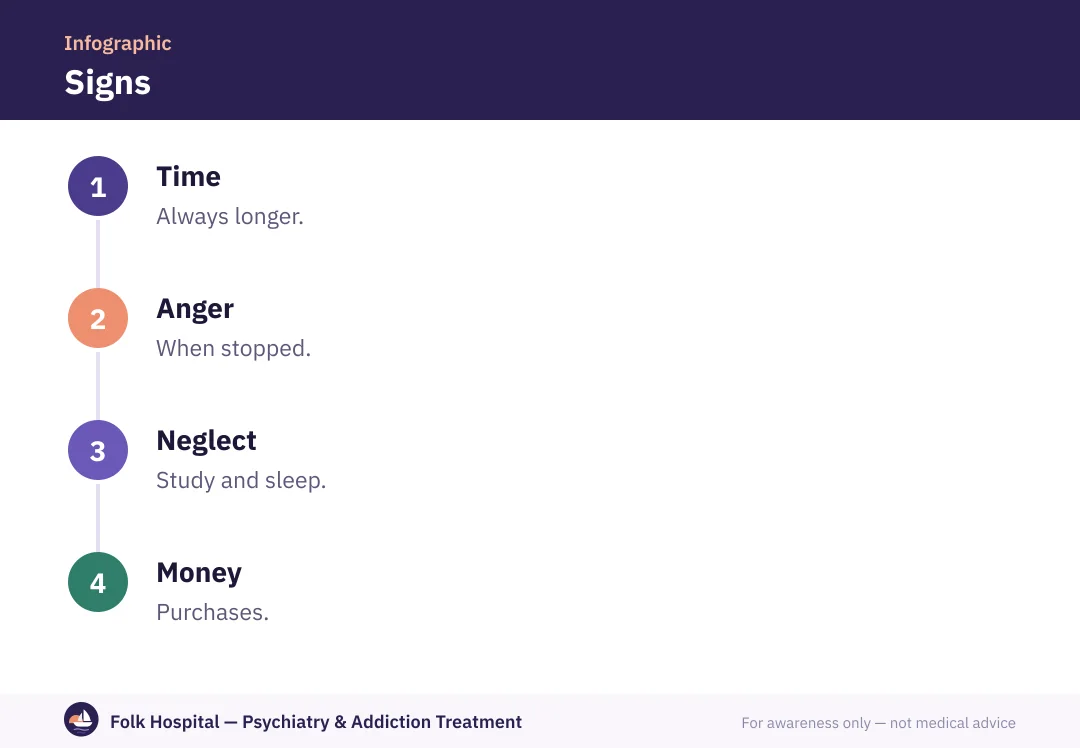
- Constant thoughts about gaming.
- Gradually increasing time.
- Failed attempts to cut down.
- Anger or sadness when stopped.
- Lying about time or spending.
- Neglecting study, sleep and hygiene.
02Where do signs show?
| Area | What you may notice |
|---|---|
| School | Falling grades and absence |
| Sleep | Late nights and late waking |
| Family | Isolation and conflict |
| Money | In-game purchases |
Healthy passion
- Plays and stops
- Keeps up with duties
Addiction
- Can't stop
- Loses study and sleep
Read also: gaming addiction, phone addiction test, gaming harms.
؟Frequently asked questions
What are the first signs of gaming addiction?
Gradually rising time, constant thoughts about gaming, and declining study and sleep.
Is anger when the device is taken a sign?
It may be a withdrawal sign, especially if severe and repeated.
Is in-game spending a sign?
Yes, especially if hidden or beyond means.
Is staying up to game a sign?
Yes. Sleep disruption is among the clearest signs.
How do I tell passion from addiction?
Passion doesn't disrupt life; addiction causes clear losses with loss of control.
Is there a test?
You can start with the phone and device addiction test; final assessment is by a specialist.
Sources and references
- Gaming disorder (ICD-11 FAQ) — World Health Organization
- Addictive behaviours: gaming disorder — World Health Organization

Written byDr. Mohamed HosneyConsultant in mental health and behavioural rehabilitation
A specialist in psychological rehabilitation, behaviour modification and relapse prevention, with over 15 years in addiction programmes.
For awareness only — not a substitute for medical advice. Editorial policy · View profile