01Map of causes
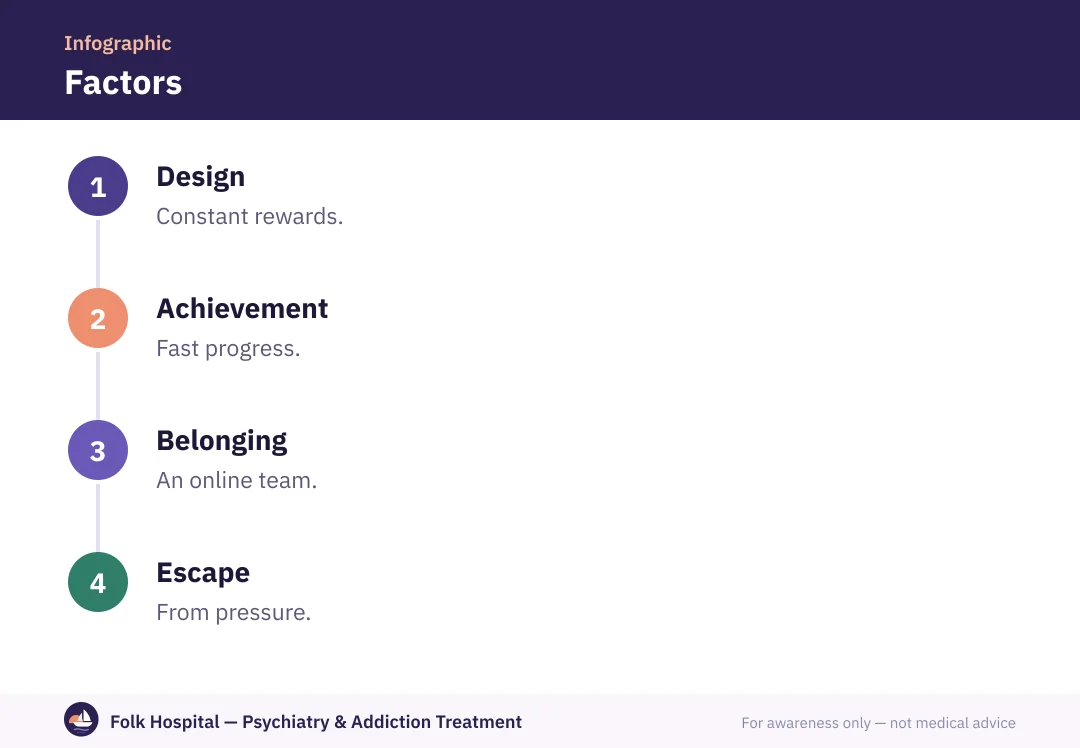
| Type | Examples |
|---|---|
| Game design | Intermittent rewards, endless levels, loot boxes |
| Personal | ADHD, social anxiety, depression |
| Family | No rules, conflict, busy parents |
| Social | Loneliness, bullying, study pressure |
Raises risk
- Device in the bedroom
- Unlimited time
- Isolation
Protects
- Clear rules
- Sport and activities
- Family dialogue
Read also: gaming addiction, dopamine, ADHD.
؟Frequently asked questions
Why do children get addicted to games?
Attractive design, factors like ADHD and anxiety, and escape from pressure.
Are games designed to be addictive?
Many use intermittent rewards and endless levels to keep players.
What are loot boxes?
Paid rewards with random outcomes resembling gambling.
Is loneliness a cause?
Yes. Games can replace real relationships.
What is the family's role?
Clear rules and shared activities protect; conflict increases escape.
Is dopamine responsible?
Rewards activate dopamine, reinforcing the urge to repeat.
Sources and references
- Gaming disorder (ICD-11 FAQ) — World Health Organization
- Addictive behaviours: gaming disorder — World Health Organization

Written byDr. Mohamed HosneyConsultant in mental health and behavioural rehabilitation
A specialist in psychological rehabilitation, behaviour modification and relapse prevention, with over 15 years in addiction programmes.
For awareness only — not a substitute for medical advice. Editorial policy · View profile