01Harms
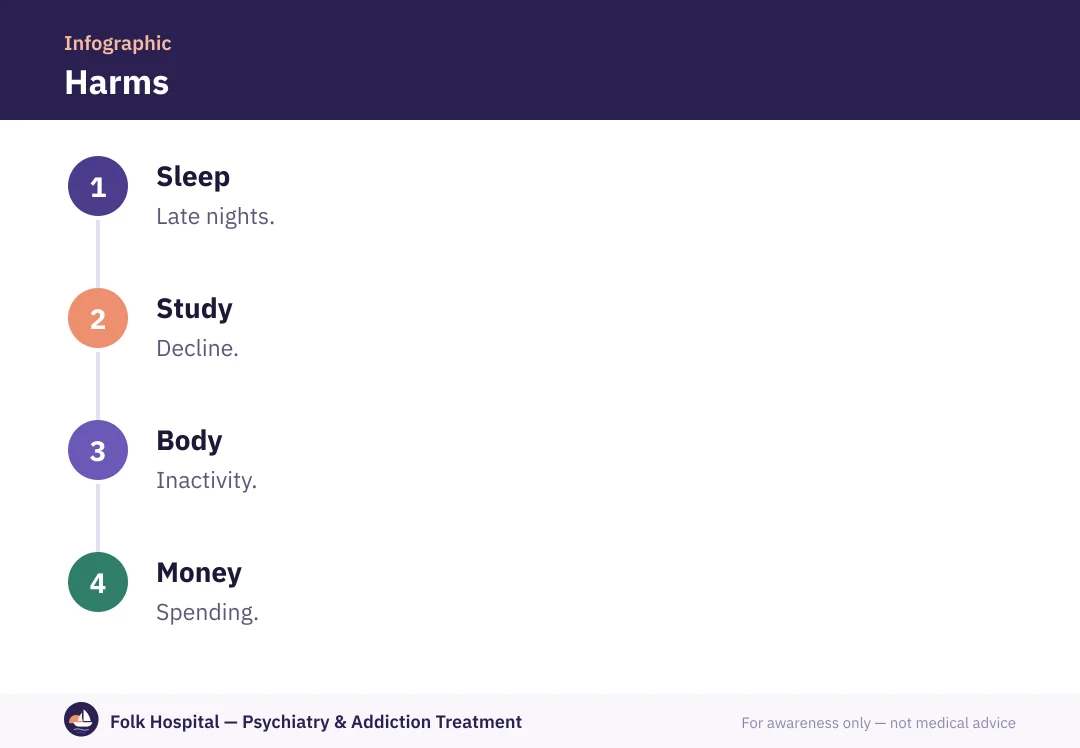
| Area | Harm |
|---|---|
| Sleep | Late nights and insomnia |
| Study and work | Decline and absence |
| Body | Neck and back pain, eye strain, weight |
| Mind | Anxiety, depression, irritability |
| Money | In-game spending |
02Repairing the harm
- Sleep firstdevices out of the bedroom at night.
- Movementdaily physical activity.
- Studya catch-up plan.
- Relationshipsregular family time.
Read also: gaming addiction, signs, sleep disorders.
؟Frequently asked questions
What are the harms of gaming addiction?
Lack of sleep, falling grades, isolation, physical pain, spending, anxiety and depression.
Do games cause violence?
The link is indirect, but addiction is associated with irritability and conflict when stopped.
Do they harm the eyes?
Eye strain and dryness are common with long use.
Do they affect social development?
Yes. Isolation reduces chances to build social skills.
Do the harms go away?
Most improve with treatment, sleep and activity.
Do they cause seizures?
Rarely in people with light sensitivity, needing medical assessment.
Sources and references
- Gaming disorder (ICD-11 FAQ) — World Health Organization
- Addictive behaviours: gaming disorder — World Health Organization

Written byDr. Mohamed HosneyConsultant in mental health and behavioural rehabilitation
A specialist in psychological rehabilitation, behaviour modification and relapse prevention, with over 15 years in addiction programmes.
For awareness only — not a substitute for medical advice. Editorial policy · View profile