01The restriction and binge cycle
Many people try to control eating through severe restriction, so hunger and thoughts of food increase; then comes an eating episode with loss of control, then guilt, then new restriction. Treatment breaks this cycle. Read about the signs of food addiction and its causes.
02Steps of treatment
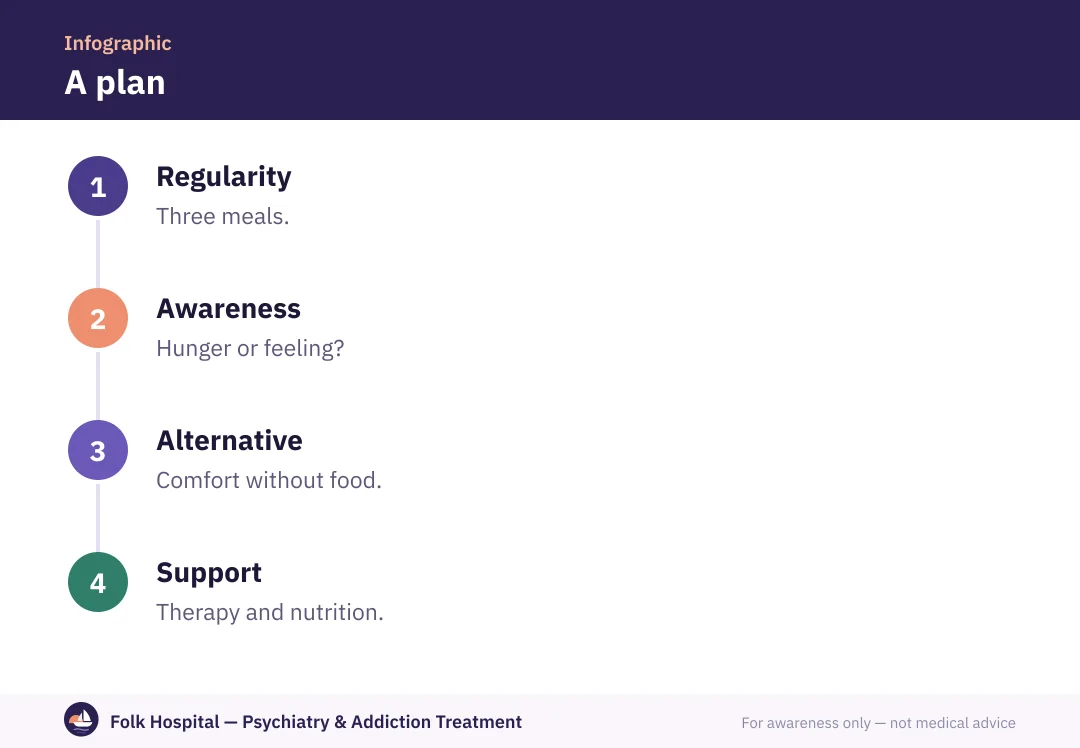
- Regular mealsmeals at fixed times, without restriction or long gaps.
- Noticing triggerswhen does compulsive eating happen? With boredom, stress, loneliness or tiredness?
- Alternatives for feelingswalking, calling a friend, writing or slow breathing.
- Changing the environmentnot eating in front of a screen, and keeping fewer trigger foods.
- Enough sleeplack of sleep increases appetite and impulsivity.
- Specialist supporta therapist and a dietitian when needed.
03Cognitive behavioural therapy
It works on all-or-nothing thoughts such as «I've had one piece, so the day is ruined», on linking self-worth to weight and shape, and on skills for tolerating feelings without turning to food.
Avoid quick fixes
Harsh diets, unprescribed slimming pills and stimulants can harm health and increase episodes. Consult a doctor before any medicine.
04When do you need an assessment?
- Repeated eating episodes with loss of control and great distress.
- Deliberate vomiting or using laxatives after eating.
- Ongoing sadness, depression or anxiety.
Read about eating disorders and their treatment and the harms of food addiction.
؟Frequently asked questions
Does a harsh diet treat compulsive eating?
It usually makes it worse, because restriction leads to bigger eating episodes.
What's the difference between emotional eating and real hunger?
Real hunger comes gradually and accepts different foods; emotional hunger is sudden, wants specific foods and is often followed by guilt.
Is compulsive eating an eating disorder?
If episodes of eating large amounts with loss of control and great distress recur, it may be binge-eating disorder, which needs a specialist assessment.
Are there medicines for compulsive eating?
In binge-eating disorder the doctor may prescribe medicines in selected cases, but psychological therapy is the foundation.
Sources and references
- Eating Disorders — National Institute of Mental Health (NIMH)
- Psychotherapies — National Institute of Mental Health (NIMH)
- Depression — National Institute of Mental Health (NIMH)
- Addiction: what is it? — NHS (UK)

A specialist in psychological rehabilitation, behaviour modification and relapse prevention, with over 15 years in addiction programmes.
For awareness only — not a substitute for medical advice. Editorial policy · View profile