01Harms
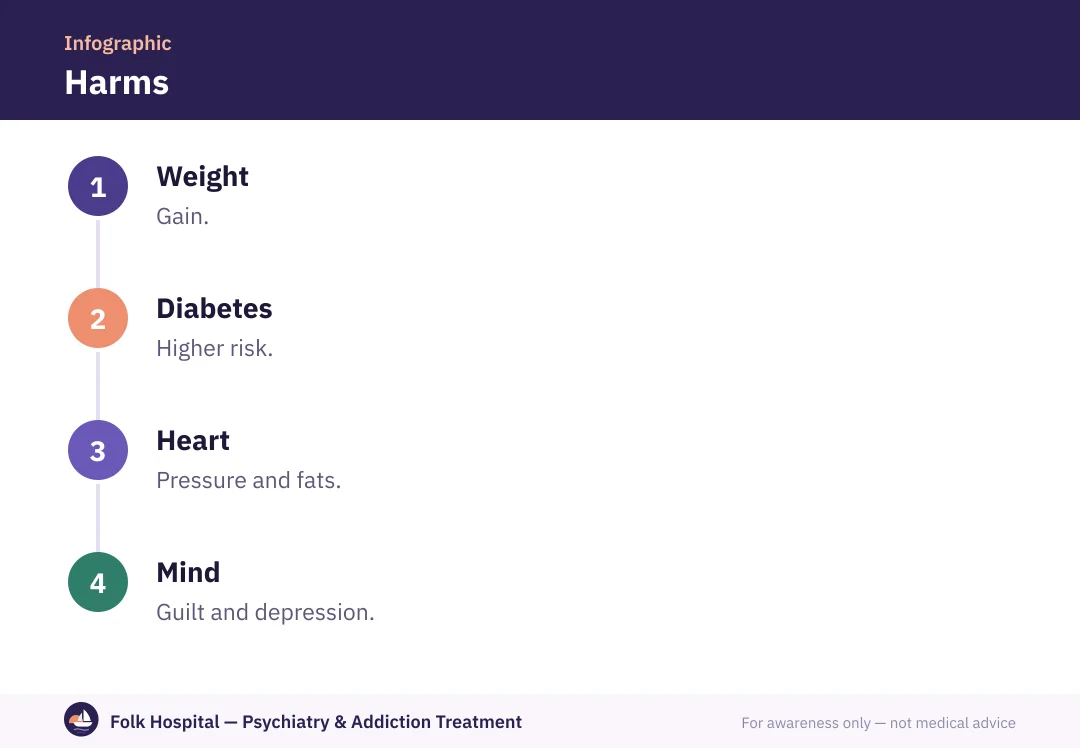
| Area | Harm |
|---|---|
| Body | Sugar, pressure, digestion, joints |
| Mind | Guilt, depression |
| Social | Isolation and stigma |
| Behaviour | Diet-binge cycle |
02Recovery steps
- Medical follow-upfor basic tests.
- Psychotherapyfor the relationship with food.
- Regularitymeals and sleep.
- Self-kindnessinstead of blame.
Read also: food addiction, harms of eating disorders, low self-esteem.
؟Frequently asked questions
What are the harms of food addiction?
Physical health problems, guilt, depression, low self-esteem and a diet-binge cycle.
Does it cause diabetes?
Chronic overeating raises the risk of blood-sugar disorders.
Does it cause depression?
Guilt and isolation are linked to depression.
Does weight stigma worsen it?
Yes. Stigma increases emotional eating and isolation.
What is the key step?
Treating the relationship with food and emotions, with medical follow-up.
Can the harms improve?
Yes, with treatment and gradually improving habits.
Sources and references
- Binge eating disorder — NHS (UK)
- Eating Disorders — National Institute of Mental Health (NIMH)

Written byDr. Mohamed HosneyConsultant in mental health and behavioural rehabilitation
A specialist in psychological rehabilitation, behaviour modification and relapse prevention, with over 15 years in addiction programmes.
For awareness only — not a substitute for medical advice. Editorial policy · View profile