01Vulnerability and experiences
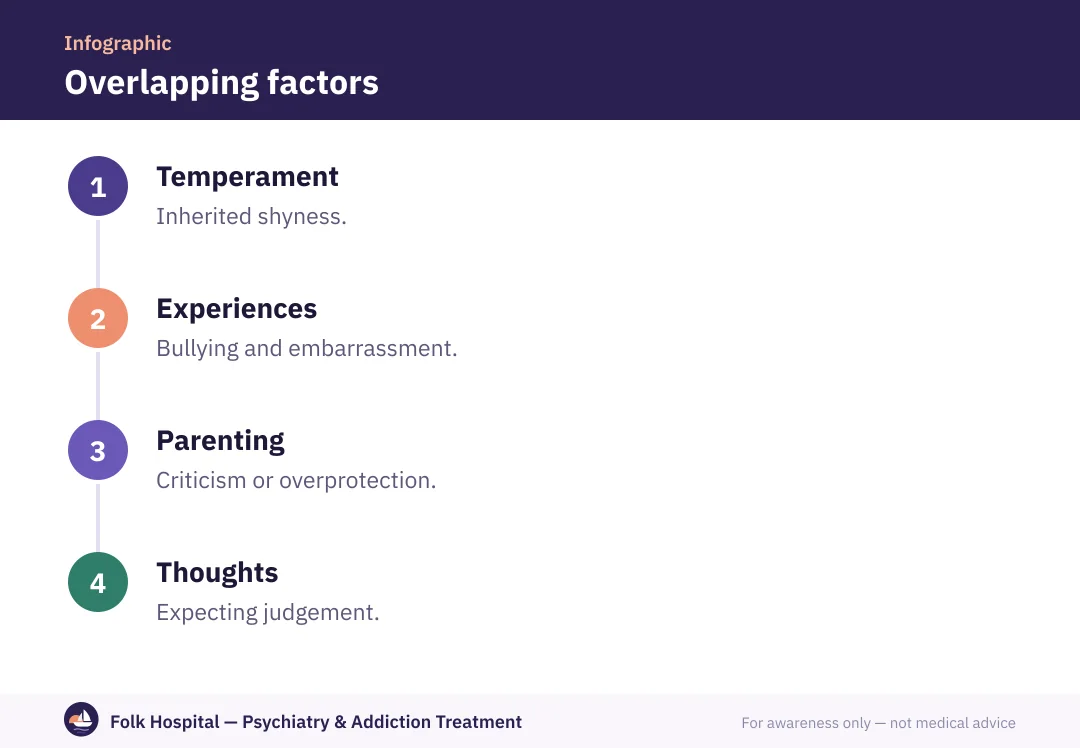
| Factor | Role |
|---|---|
| Temperament | Shyness and reserve from childhood |
| Genes | A tendency to anxiety |
| Bullying and ridicule | Linking social situations with pain |
| Public embarrassment | An event that leaves fear of repetition |
| Critical parenting | Sensitivity to evaluation |
| Over-protection | Fewer chances to practise |
| Particular circumstances | A stammer, a different appearance, or moving somewhere new |
02The cycle that maintains anxiety
- A thought«people will judge me».
- Avoidance or a safety behaviourso the thought is never tested.
- Temporary reliefteaching that avoidance works.
- Less confidenceand less practised skills.
- More anxietyin the next situation.
03What protects children?
Raises risk
- Criticism and ridicule.
- Protecting them from every situation.
- Ignoring bullying.
Protects
- Encouraging gradual experience.
- Praising the attempt.
- Acting against bullying.
Read social anxiety, causes of phobias and low self-esteem.
؟Frequently asked questions
What causes social anxiety?
A shy temperament, genetic tendency, bullying or embarrassment, critical or over-protective parenting, and negative beliefs about oneself.
Is social anxiety hereditary?
Genes contribute to a tendency to anxiety, but experiences and learning play a big role.
Does bullying cause social anxiety?
It can contribute strongly, especially in childhood or adolescence.
Does parenting play a role?
Harsh criticism or over-protection may contribute, but causes are many and parents alone aren't to blame.
Why does social anxiety persist?
Because avoidance and safety behaviours stop people discovering that situations are less dangerous than expected.
Can it start in adulthood?
It may begin after an embarrassing event or major life change, though it usually starts in adolescence.
Sources and references
- Social anxiety (social phobia) — NHS (UK)
- Anxiety Disorders — National Institute of Mental Health (NIMH)
- Anxiety disorders — fact sheet — World Health Organization

A psychiatrist specialising in addiction and mental illness in adults and adolescents, with a focus on dual diagnosis.
For awareness only — not a substitute for medical advice. Editorial policy · View profile