01What is this test based on?
We wrote the questions in plain language to cover the main signs of social anxiety that specialists ask about in an assessment. It helps you see whether you need another step.
02How to read your result
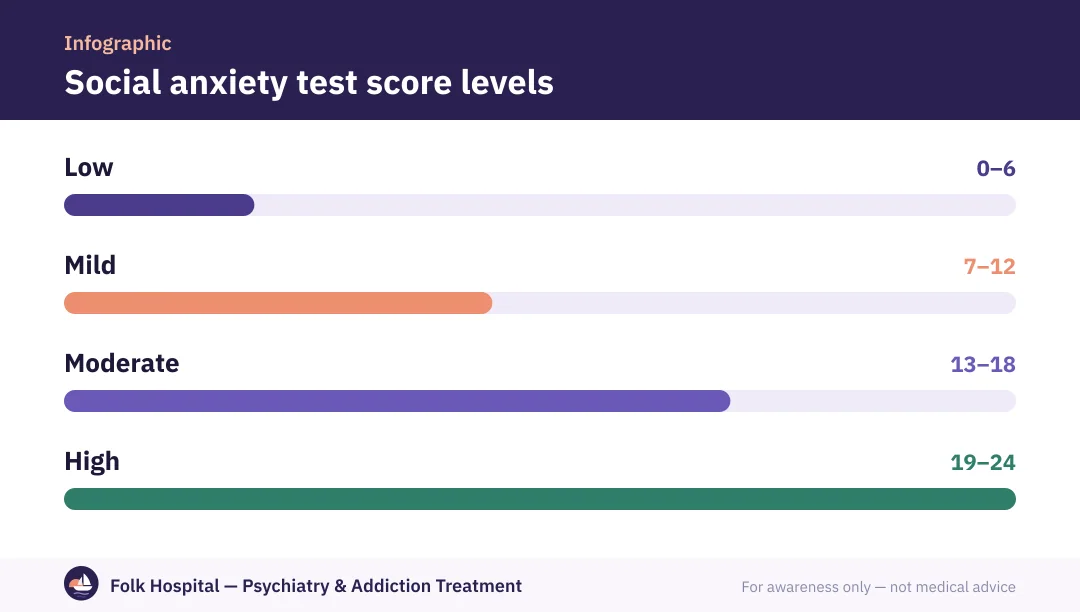
| Score | Level |
|---|---|
| 0–6 | Low |
| 7–12 | Mild |
| 13–18 | Moderate |
| 19–24 | High |
Read about social anxiety.
03Shyness or social anxiety?
Possible social anxiety
- Intense anxiety days before an event
- Avoiding presentations and interviews
- Physical symptoms like blushing and trembling
Ordinary shyness
- Mild tension that fades quickly
- Joining in despite nerves
- Doesn't disrupt life
- Start smallask a shop assistant or greet a colleague.
- Don't use alcoholas a crutch.
- Watch your thoughts«everyone is judging me» is a thought, not a fact.
- Seek treatmentif avoidance affects work or study.
؟Frequently asked questions
Is social anxiety just shyness?
No, shyness is normal; social anxiety is intense fear causing avoidance that affects life, and it responds to treatment.
Does the site store my answers?
No, the score is calculated on your device and isn't sent or stored.
How does shyness differ from social anxiety?
Social anxiety causes intense distress and avoidance that disrupts study or work.
Does alcohol help in social situations?
Briefly, but it raises dependence risk and blocks real learning.
Does social anxiety go away by itself?
It often persists untreated and grows with avoidance.
What's the first step?
Facing small situations gradually instead of avoiding them.
Sources and references
- Social anxiety (social phobia) — NHS (UK)
- Anxiety Disorders — National Institute of Mental Health (NIMH)

A psychiatrist specialising in addiction and mental illness in adults and adolescents, with a focus on dual diagnosis.
For awareness only — not a substitute for medical advice. Editorial policy · View profile