01The aims of treatment
Schizophrenia affects thinking, perception and behaviour, and can cause hallucinations, delusions, disorganised speech and withdrawal from life. International health bodies note that it's treatable and that many people reach long-term stability. The aims are controlling symptoms, preventing relapse and restoring social and working life. Read about the symptoms of schizophrenia.
02Medication
| Option | When it's used | Notes |
|---|---|---|
| Oral antipsychotics | Most cases | The doctor chooses according to symptoms and side effects |
| Long-acting injections | For those who forget or stop medication | An injection every two to several weeks |
| Clozapine | Cases that haven't responded to two or more medicines | Very effective; needs regular blood count monitoring |
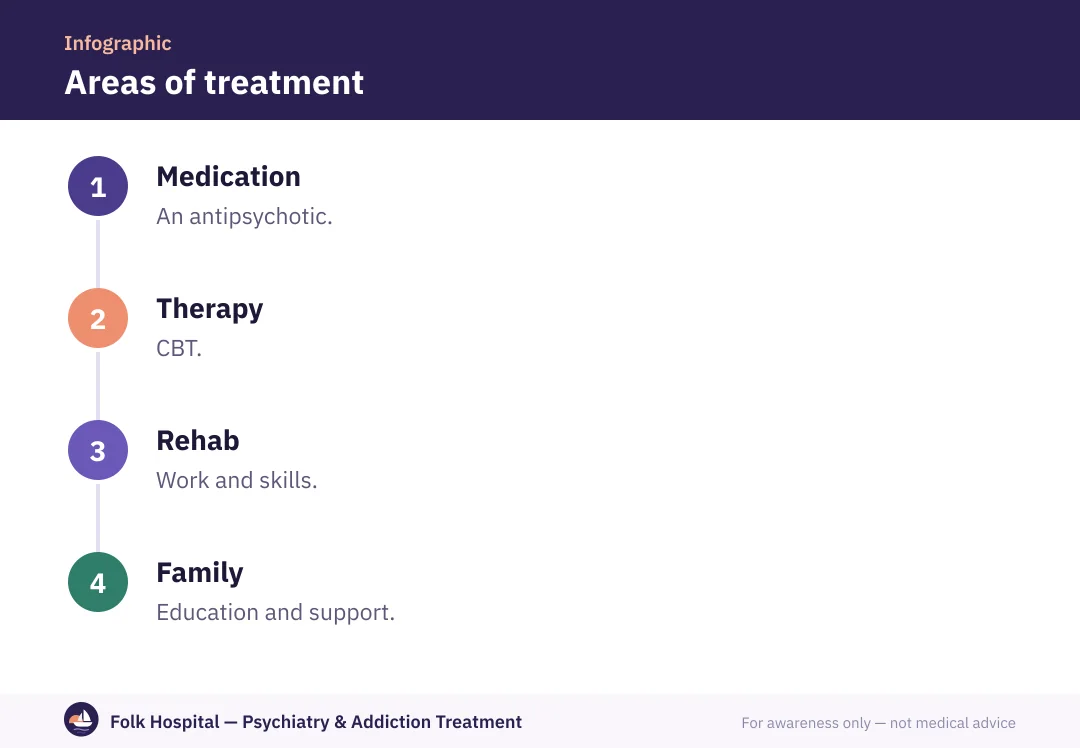
Medicines need monitoring for side effects such as weight gain, raised blood sugar and lipids, or stiffness, and the doctor adjusts the plan accordingly. Continuing medication after improvement clearly reduces relapse.
03Psychological and social treatments
- CBT for psychosis: helps people cope with hallucinations and distressing thoughts and reduces their impact.
- Family therapy: lowers tension at home, teaches the family the signs of relapse, and is linked to fewer relapses.
- Social and vocational rehabilitation: daily living skills, and a gradual return to work or study.
- Psychoeducation: understanding the illness and the medicine.
04Early signs of relapse
Watch for these signs
- Disturbed sleep.
- Growing withdrawal and isolation.
- New suspicions or strange ideas.
- Neglecting hygiene and meals.
- Stopping medication.
We agree a clear plan with the family for what to do when they appear.
05Drugs and schizophrenia
Cannabis and stimulants: a double danger
Cannabis and stimulants are linked to worse symptoms and relapse and can trigger psychotic episodes. Stopping them is a core part of treatment. Read about schizophrenia and addiction.
06When is admission needed?
When there's danger to self or others, refusal of food and medication with deterioration, or acute symptoms that can't be managed at home. See our psychiatric hospital.
Read how to deal with someone with schizophrenia and schizophrenia versus split personality.
؟Frequently asked questions
Can schizophrenia be cured?
It's usually a long-term illness, but many people reach long-term stability and a productive life with treatment.
Why does the patient refuse medication?
Sometimes because the illness itself stops them seeing they're unwell, or because of side effects. Calm conversation, choosing a medicine with fewer side effects, and long-acting injections help.
What are long-acting injections?
A form of antipsychotic given by injection every two to several weeks, ensuring the medicine is received without remembering daily tablets.
Can someone with schizophrenia work and marry?
Many can, with regular treatment and support. It needs an individual assessment and a realistic plan.
Does cannabis affect schizophrenia?
Yes, it's linked to worse symptoms and relapse, and stopping it is an important part of treatment.
Sources and references
- Psychosis and schizophrenia in adults (CG178) — National Institute for Health and Care Excellence (NICE)
- Schizophrenia — fact sheet — World Health Organization
- Schizophrenia — National Institute of Mental Health (NIMH)
- Mental Health Medications — National Institute of Mental Health (NIMH)

A psychiatrist specialising in addiction and mental illness in adults and adolescents, with a focus on dual diagnosis.
For awareness only — not a substitute for medical advice. Editorial policy · View profile