01Core principles
What makes things harder
- Sudden change without warning.
- Long, complex instructions.
- Crowded, noisy places without preparation.
- Comparing them with other children.
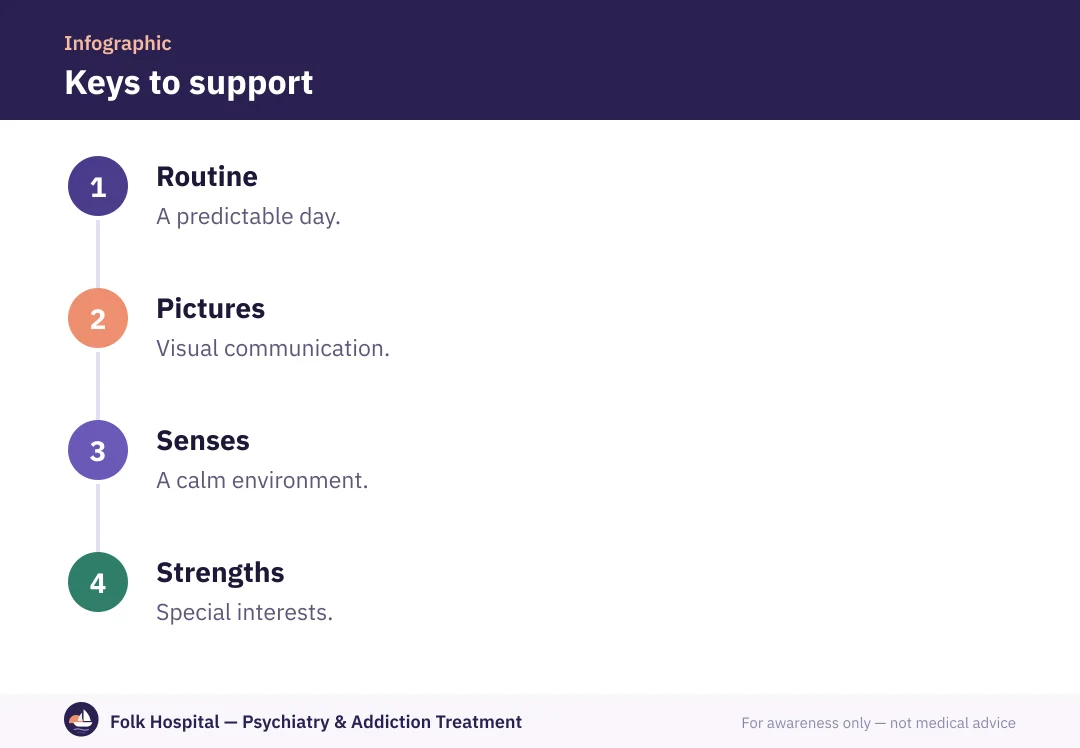
What helps
- A steady routine and a picture schedule.
- Short, clear sentences.
- Advance preparation and calming tools.
- Building on strengths and interests.
02Meltdowns
- Understand the causesensory overload, change, or being unable to express themselves.
- Reduce stimulationdim lights and quiet.
- Safetyremove anything that could hurt them.
- As few words as possiblein a calm voice.
- After calmingno lectures; learn what can be avoided next time.
03Everyday skills
| Area | Ideas |
|---|---|
| Communication | Pictures, signs and communication devices when needed |
| Sleep | A steady bedtime routine and fewer screens |
| Eating | Introducing new foods gradually without pressure |
| Sensitivity | Noise-cancelling headphones, comfortable clothing |
| Play | Sharing their interests and broadening them gradually |
04Family and siblings
Siblings need their own time and an understanding of their brother's or sister's condition, and parents need support and rest. Read the family programme, autism and children's mental health.
؟Frequently asked questions
How do I support an autistic child at home?
With a steady routine, short clear instructions, visual aids, preparing for change, respecting sensory sensitivities and praising good behaviour.
What should I do during a meltdown?
Reduce stimulation, stay calm, remove anything that could hurt them, give them a safe space and use as few words as possible.
Should I punish difficult behaviour?
Punishment alone rarely helps. Understand the cause, teach an alternative and reward appropriate behaviour.
How can I develop their speech?
Through speech therapy, talking with them during play, using few clear words, and pictures and alternative communication tools when needed.
Can they attend a mainstream school?
It depends on support level: some children integrate with support, others need specialist education.
How do I protect myself from burnout?
By sharing responsibility, joining family support groups, taking breaks and getting psychological support when needed.
Sources and references
- Autism Spectrum Disorder — National Institute of Mental Health (NIMH)
- Mental disorders — fact sheet — World Health Organization

A psychiatrist specialising in addiction and mental illness in adults and adolescents, with a focus on dual diagnosis.
For awareness only — not a substitute for medical advice. Editorial policy · View profile