01Risk factors
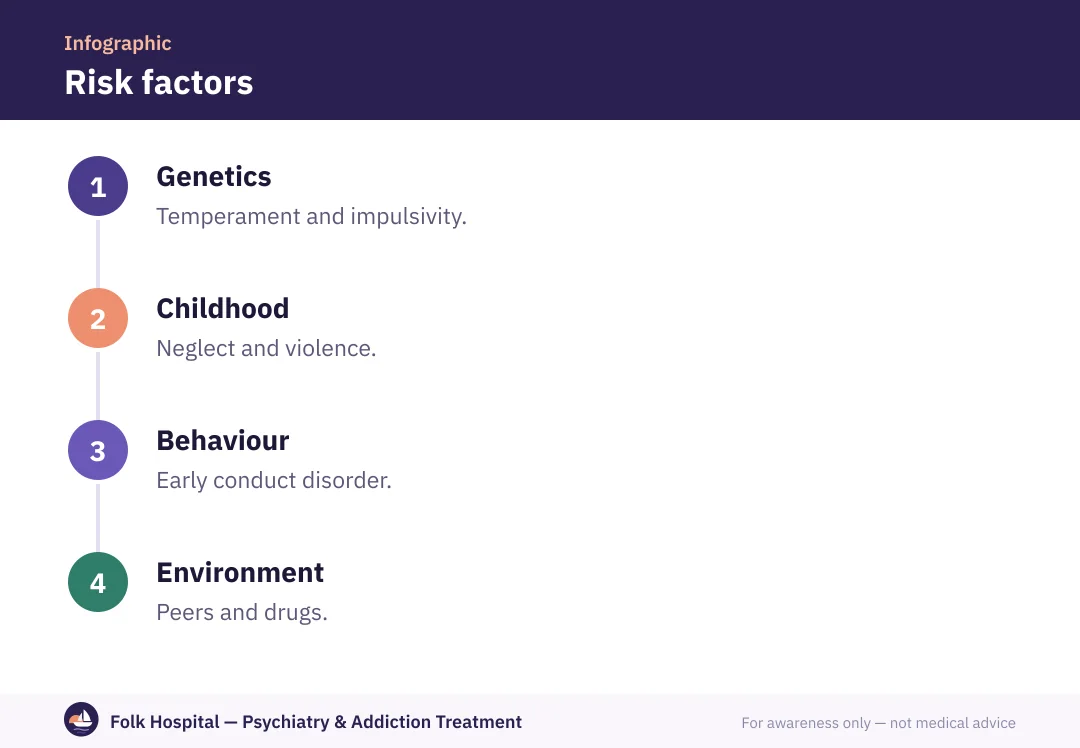
| Category | Factors |
|---|---|
| Genetic and temperamental | Impulsivity, weak response to punishment, difficulty with empathy |
| Family | Abuse, neglect, domestic violence, harsh or inconsistent parenting |
| Parents | Addiction or criminal behaviour in a parent |
| Social | Deviant peers, poverty, dropping out of school |
| Neurological | Sometimes injuries to brain control areas |
02The path from childhood to adulthood
- Difficult temperamentimpulsivity and difficulty calming down.
- An unsupportive environmentviolence, neglect or harshness.
- Conduct disorderaggression, lying and vandalism before 15.
- Reinforcementpeers, substances and legal problems.
- A lasting patternpersonality disorder after 18.
03Where can intervention happen?
Early
- Parent training programmes.
- Treating conduct disorder in the child.
- School support.
- Treating a parent's addiction.
Later
- Addiction treatment.
- Violence-reduction programmes.
- Problem-solving skills.
- Long-term follow-up.
Read antisocial personality, children's mental health and oppositional defiant disorder.
؟Frequently asked questions
What causes antisocial personality disorder?
A mix of genetic vulnerability, impulsivity and difficult temperament, with an environment of abuse, neglect, violence or inconsistent parenting.
Is it hereditary?
Genes contribute to vulnerability, but environment plays a large role in whether it develops.
Is parenting a cause?
Harsh, neglectful or inconsistent parenting is a risk factor, but not the only cause.
Can it be prevented?
Early intervention with children showing conduct disorder, and family support, reduce risk.
Is addiction a cause?
Addiction often accompanies it and worsens behaviour, and parental addiction is a childhood risk factor.
Do brain injuries play a role?
Some brain injuries, especially in frontal areas, can change control and behaviour, which the doctor assesses.
Sources and references
- Antisocial personality disorder — NHS (UK)
- Personality disorder — NHS (UK)
- Comorbidity: Substance Use and Other Mental Disorders — National Institute on Drug Abuse (NIDA)

A psychiatrist specialising in addiction and mental illness in adults and adolescents, with a focus on dual diagnosis.
For awareness only — not a substitute for medical advice. Editorial policy · View profile