01Common forms
| Form | What appears |
|---|---|
| Depressed mood | Sadness, crying, hopelessness |
| Anxiety | Tension, worry, insomnia |
| Behavioural | Rebellion, impulsivity, substance use |
| Mixed | A mix of the above |
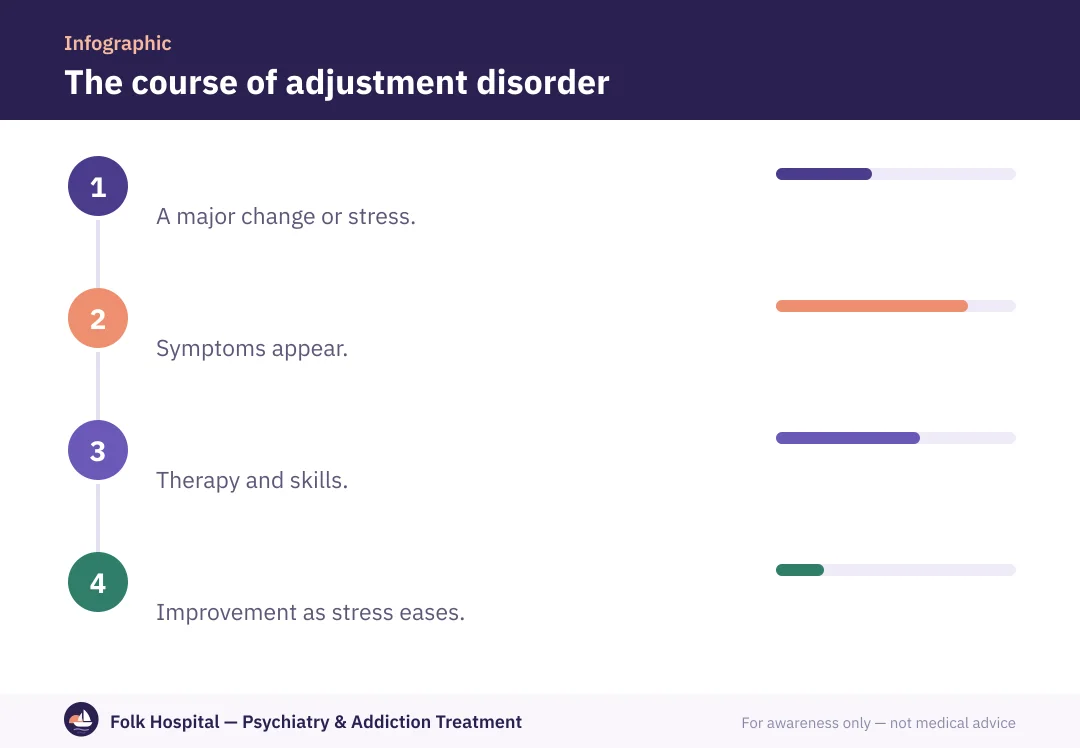
02Treatment
- Identify the stressorand understand its impact.
- Coping skillsproblem-solving and managing emotions.
- Supportfamily and friends.
- Follow-upto catch any shift into depression.
Read also: stress, psychological states, depression.
؟Frequently asked questions
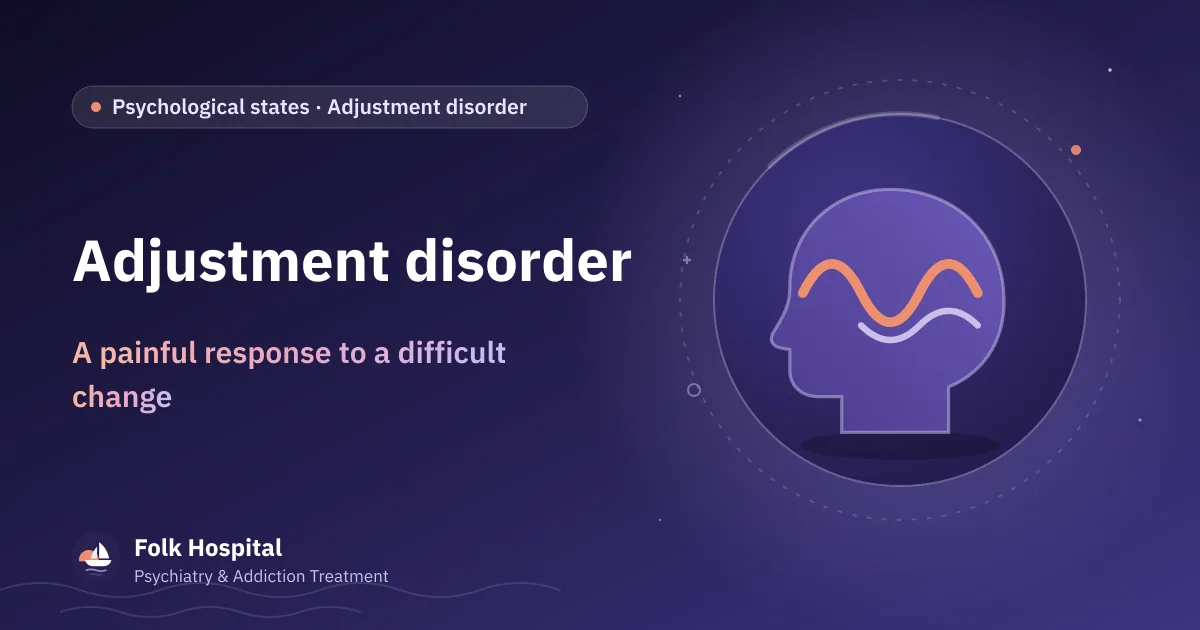
What is adjustment disorder?
An excessive psychological response to a stressful event, appearing within months and disrupting life.
How does it differ from depression?
It's tied to an event and usually milder; depression is broader and more severe.
How long does it last?
It usually improves within months after the stress ends or the person adapts.
Does it need medication?
Psychotherapy usually suffices; medication for severe symptoms like insomnia or depression.
What events cause it?
Divorce, job loss, moving, chronic illness, school problems.
Does it affect children?
Yes, as with parents separating or changing schools.
Sources and references
- Adjustment disorder — MedlinePlus — U.S. National Library of Medicine — MedlinePlus
- Stress — NHS (UK)
- Adjustment disorder — MedlinePlus — U.S. National Library of Medicine — MedlinePlus
- Stress — NHS (UK)

A psychiatrist specialising in addiction and mental illness in adults and adolescents, with a focus on dual diagnosis.
For awareness only — not a substitute for medical advice. Editorial policy · View profile