01Known factors
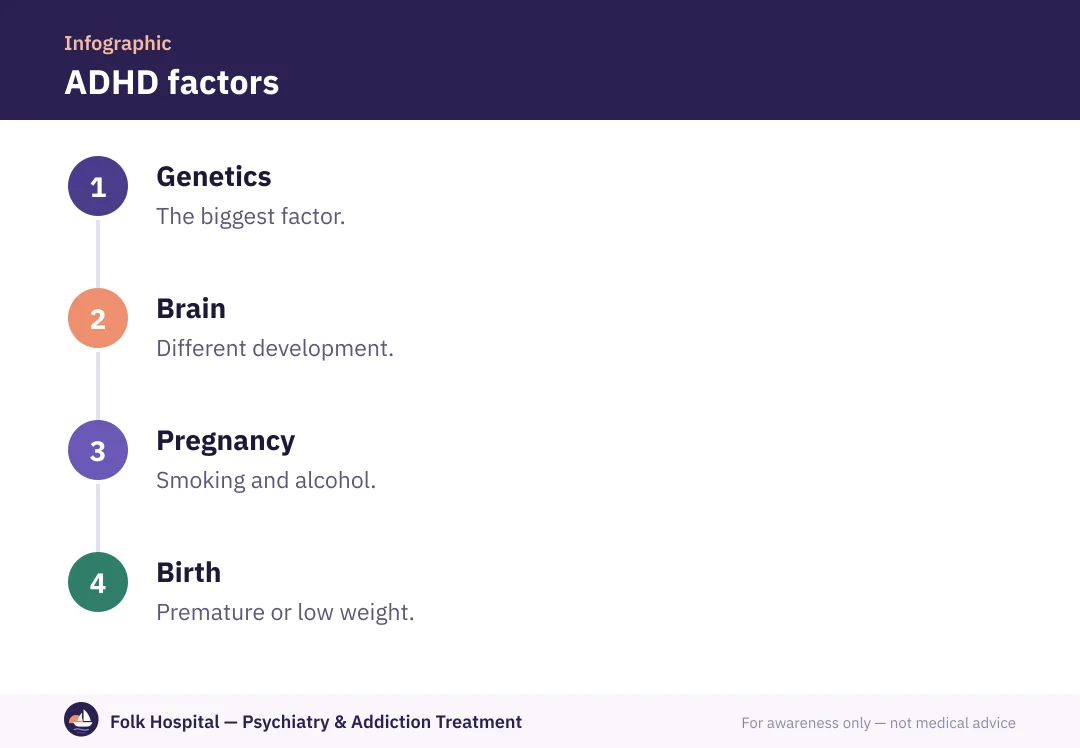
| Factor | Role |
|---|---|
| Genes | The strongest, involving many genes |
| Brain development | Delayed maturation of control and attention areas |
| Neurotransmitters | Dopamine and noradrenaline |
| Pregnancy | Smoking, alcohol or some substances |
| Birth | Premature birth and low birth weight |
| Environment | Lead exposure or sometimes head injuries |
02Myths and facts
Myths
- Sugar causes ADHD.
- Spoiling or bad parenting.
- Screens alone cause it.
- The child just «doesn't want» to focus.
Facts
- A strong genetic and neurological basis.
- Environment affects severity, not existence.
- The child tries but finds it genuinely hard.
- Treatment clearly helps.
03What reduces symptom severity?
- A structured routinefixed times and clear instructions.
- Enough sleeplack of sleep worsens distraction.
- Physical activityhelps regulate attention.
- Fewer screensespecially before bed.
- Appropriate treatmentbehavioural, and medication when needed.
Read ADHD, its symptoms and mental illness and heredity.
؟Frequently asked questions
What causes ADHD?
A mix of strong genetic factors and differences in brain development and messengers, plus some pregnancy and birth factors.
Is ADHD hereditary?
Yes, it's among the most heritable disorders, and it's often found in a parent after the child is diagnosed.
Does sugar cause hyperactivity?
There's no strong evidence that sugar causes ADHD.
Do screens cause ADHD?
They don't cause it, but excess use may worsen attention difficulties in children generally.
Does parenting cause ADHD?
No, but structured, calm parenting helps manage symptoms.
What happens in the brain?
Differences in the maturation and activity of control and attention areas, and in dopamine and noradrenaline function, which is why medicines acting on them help.
Sources and references
- Attention-Deficit/Hyperactivity Disorder — National Institute of Mental Health (NIMH)
- Mental Health Medications — National Institute of Mental Health (NIMH)

A psychiatrist specialising in addiction and mental illness in adults and adolescents, with a focus on dual diagnosis.
For awareness only — not a substitute for medical advice. Editorial policy · View profile