01Symptoms and timing
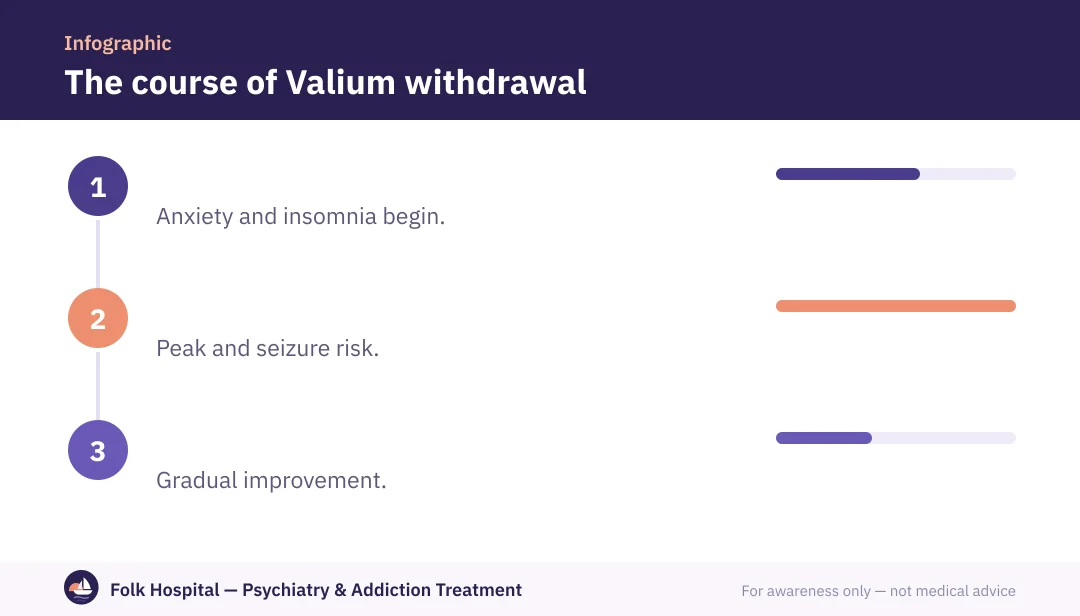
| Time | Symptoms |
|---|---|
| After several days | Anxiety, insomnia, tremor and sweating |
| First weeks | Sensitivity to light and sound, confusion and seizure risk with sudden stopping |
| Later weeks | Milder anxiety and insomnia |
02Safe reduction
- Assessmentdose, duration and reason for use.
- Slow reductionsmall steps over weeks.
- Alternatives for anxietyCBT and medicines that don't cause dependence.
- Healthy sleepfixed habits and treatment for insomnia.
- Regular follow-upto adjust the plan.
Call an ambulance on 123 for
- Seizures, severe confusion, or slow breathing with alcohol or other substances.
What to do right nowAmbulance: 123
Read about Valium addiction treatment, benzodiazepine withdrawal and the harms of Valium.
؟Frequently asked questions
Is Valium withdrawal milder than Xanax's?
Often smoother at first because it's long-acting, but it lasts longer and can be dangerous if sudden.
Why do doctors sometimes use Valium to help stop other sedatives?
Because it's long-acting, it gives a steadier blood level and makes reduction smoother; the doctor decides this case by case.
Is Valium safe with alcohol?
No. Mixing them can cause severe drowsiness, slow breathing and overdose.
How long does reduction take?
Usually weeks to months, depending on dose and duration.
Sources and references
- Prescription Medicines — research topic — National Institute on Drug Abuse (NIDA)
- Treatment Approaches for Drug Addiction — DrugFacts — National Institute on Drug Abuse (NIDA)
- Anxiety Disorders — National Institute of Mental Health (NIMH)

Written byDr. Mahmoud ElsawyConsultant in psychiatry and addiction treatment
A psychiatrist specialising in addiction and mental illness in adults and adolescents, with a focus on dual diagnosis.
For awareness only — not a substitute for medical advice. Editorial policy · View profile