01Why does tramadol delay ejaculation?
Tramadol raises serotonin in the nervous system, and serotonin delays the ejaculation reflex. Some medicines prescribed for this purpose use the same mechanism; the difference is that tramadol is an opioid that causes addiction and lowers hormones.
02What happens with continued use?
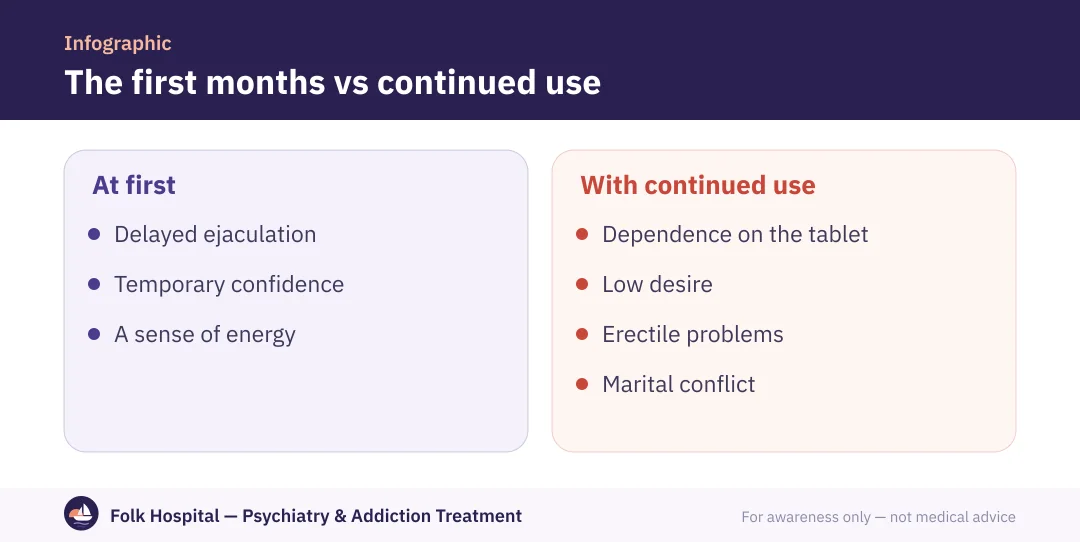
Common changes with long-term use
- Reduced sex drive.
- Erectile problems.
- Very delayed or absent ejaculation.
- Feeling unable to have sex without the tablet.
- Marital conflict from irritability and mood swings.
03What are the safe alternatives?
Premature ejaculation is treated with behavioural techniques and with medicines prescribed by a specialist at carefully chosen doses without addiction risk, along with treating any anxiety. The key is not to swap one problem for a bigger one.
؟Frequently asked questions
Can I take tramadol just before sex?
"Occasional" use often becomes regular, and the risks of seizures and interactions are present every time. It's better to see a sexual health specialist or psychiatrist for safe treatment.
Does sexual function return after quitting tramadol?
Usually yes, within weeks to months. Temporary premature ejaculation may appear at first and improves with time or appropriate treatment.
Sources and references
- Opioids — research topic — National Institute on Drug Abuse (NIDA)
- Prescription Medicines — research topic — National Institute on Drug Abuse (NIDA)

A psychiatrist specialising in addiction and mental illness in adults and adolescents, with a focus on dual diagnosis.
For awareness only — not a substitute for medical advice. Editorial policy · View profile