01How does tramadol addiction begin?
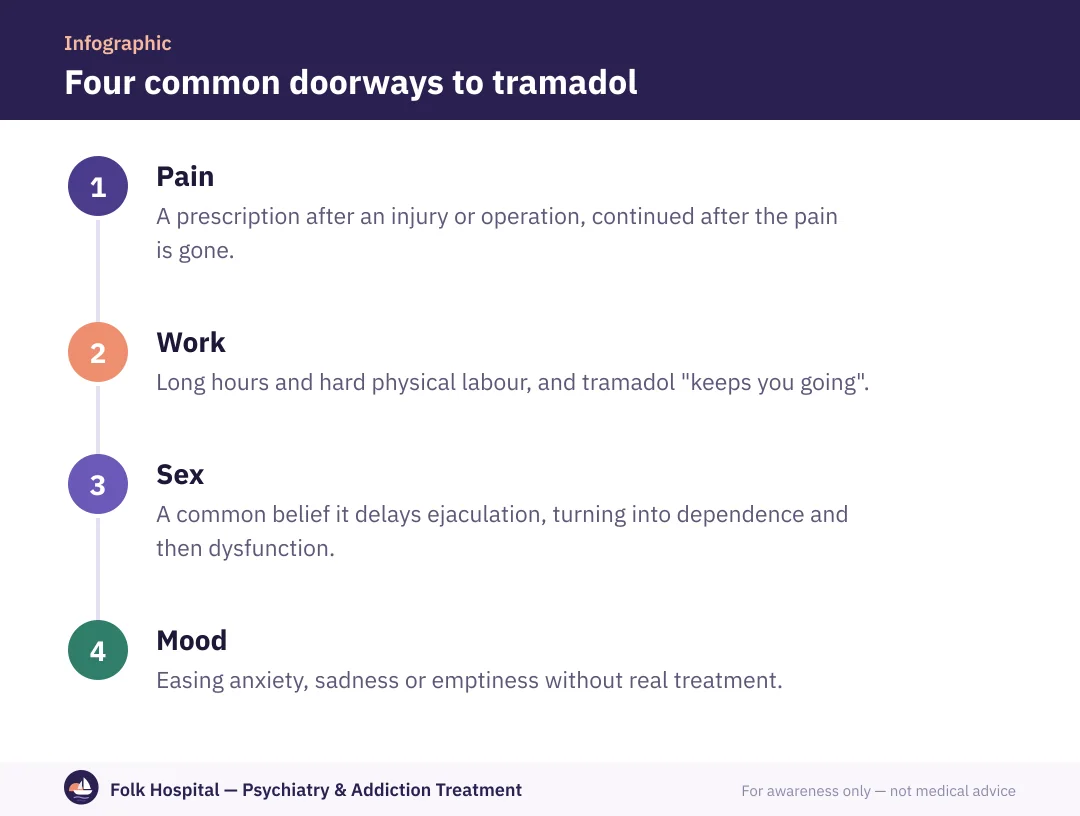
It rarely starts as a search for a high. It starts as a solution: for pain, for exhaustion or for a problem in the bedroom. Over time the person finds they need a tablet to start the day, then two, until a day without it feels impossible.
02Who is most at risk?
Risk factors
- Physically demanding jobs or long shift work.
- Chronic pain without a clear treatment plan.
- Untreated anxiety or depression.
- A family history of addiction.
- Friends or colleagues who use it.
- Easy access without a prescription.
03Why does the cause matter?
Someone who started because of pain needs a pain plan; someone who started because of depression needs that treated; someone who started for sexual reasons needs safe medical or psychological help. If the cause isn't addressed, the road back to tramadol stays open. Read about dual diagnosis.
؟Frequently asked questions
Can I become addicted to tramadol taken on prescription?
Sticking to the dose and duration lowers the risk a lot, but long-term use causes physical dependence even on prescription, so stopping should be gradual and supervised by your doctor.
Sources and references
- Opioids — research topic — National Institute on Drug Abuse (NIDA)
- Prescription Medicines — research topic — National Institute on Drug Abuse (NIDA)

A psychiatrist specialising in addiction and mental illness in adults and adolescents, with a focus on dual diagnosis.
For awareness only — not a substitute for medical advice. Editorial policy · View profile