01What is the therapeutic dose of tramadol?
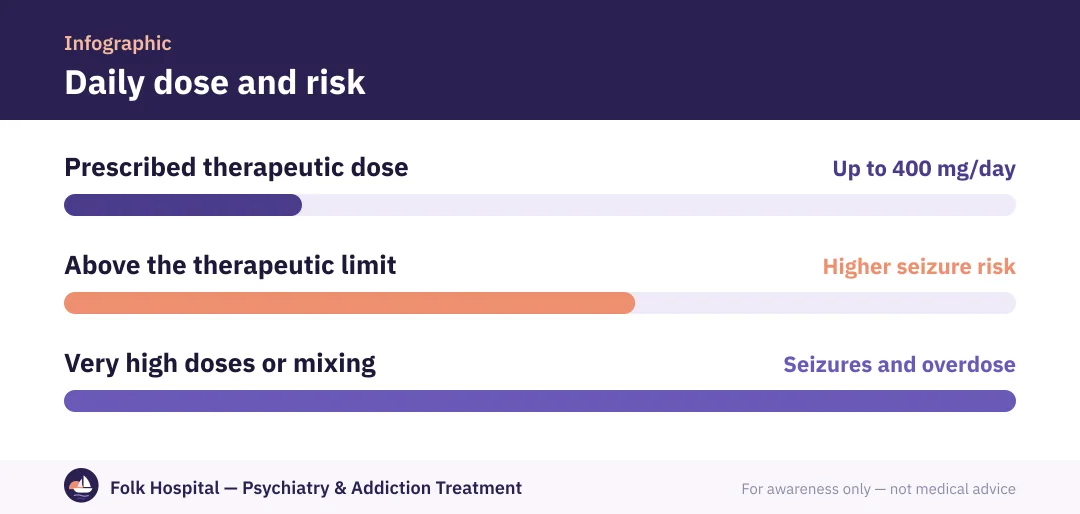
The doctor sets the dose by pain severity, age and liver and kidney function. It usually doesn't exceed 400 mg a day in adults and is lower in older people and those with kidney or liver disease. Sticking to the prescription and never increasing it yourself is the first protection against addiction and complications.
02Why are high doses so common?
With tolerance, people need bigger doses for the same effect, and high-strength tablets make reaching a large dose easy and cheap. Some add other tablets or sedatives to make up for a weaker effect, multiplying the risk.
03What are the complications of high doses?
Warning signs of a high dose
- Tremor, a racing heart and heavy sweating.
- Fever, confusion and muscle twitching (serotonin syndrome).
- A seizure.
- Severe drowsiness and slow breathing, especially with sedatives.
04What to do in an overdose or seizure
- Lay the person on their side and clear away sharp objects.
- Don't put anything in their mouth or try to restrain them.
- Watch their breathing and time the seizure.
- Don't give any medicine or drink.
Call an ambulance on 123 immediately.
Ambulance: 12305What's the right step after a first seizure?
A first seizure is a clear message that the body has reached a dangerous limit. Stopping abruptly may not be safe either, and carrying on is worse. The answer is a medical detox plan with seizure protection, followed by treatment for the dependence.
؟Frequently asked questions
Is a 225 mg tramadol tablet a medicine?
Strengths sold in legitimate pharmacies are usually much lower. High-strength tablets sold outside pharmacies are often smuggled and of unknown content and quality.
What should I do if someone has a seizure after tramadol?
Lay them on their side, move hard objects away, don't put anything in their mouth and call an ambulance on 123. Once stable they need a medical assessment and a plan to stop safely.
Sources and references
- Opioids — research topic — National Institute on Drug Abuse (NIDA)
- Opioid overdose — fact sheet — World Health Organization

A psychiatrist specialising in addiction and mental illness in adults and adolescents, with a focus on dual diagnosis.
For awareness only — not a substitute for medical advice. Editorial policy · View profile