01Harms with misuse
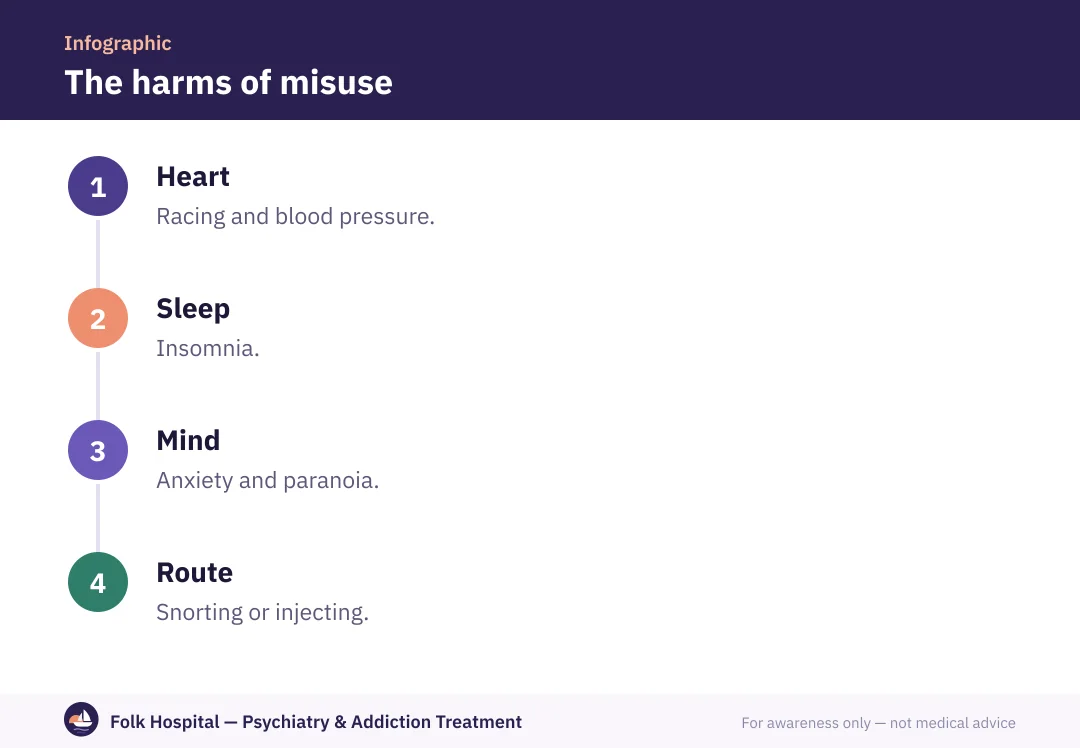
| Area | Harms |
|---|---|
| Heart | Fast heartbeat, high blood pressure and irregular rhythm |
| Sleep and nutrition | Insomnia, loss of appetite and weight loss |
| Mind | Anxiety, irritability, suspicion and psychosis at high doses |
| Way of use | Nasal damage with snorting, greater danger with injecting |
| Dependence | Tolerance, cravings and a crash after stopping |
- Chest pain, a very fast heartbeat, hallucinations or seizures.
02Safe use
For people with ADHD, supervised treatment is safe and effective. For those misusing it, assessment and treatment are needed. Read about Ritalin symptoms, its treatment and ADHD.
؟Frequently asked questions
Does Ritalin stunt children's growth?
It may slightly affect appetite and growth, which is why doctors monitor height and weight; for diagnosed patients its benefits usually outweigh the risks.
Does Ritalin harm children's growth?
It can affect appetite and weight, so the doctor monitors height and weight and adjusts the plan if needed.
Does it harm the heart?
It can raise pulse and blood pressure, so heart history is checked before prescribing, and misuse at high doses increases the risk.
Does misuse improve school results?
The evidence doesn't support that in people without ADHD, and insomnia and anxiety can harm performance.
Sources and references
- Prescription Medicines — research topic — National Institute on Drug Abuse (NIDA)
- Attention-Deficit/Hyperactivity Disorder — National Institute of Mental Health (NIMH)

A psychiatrist specialising in addiction and mental illness in adults and adolescents, with a focus on dual diagnosis.
For awareness only — not a substitute for medical advice. Editorial policy · View profile