Paper is small squares soaked in a hallucinogen, usually LSD or stronger, more dangerous synthetic substitutes.
01Detection window by sample type
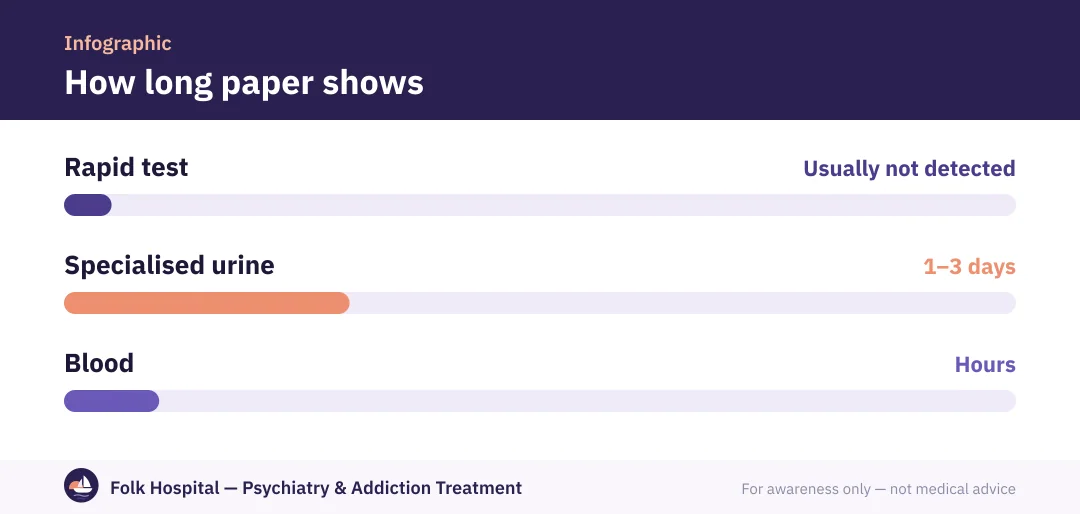
| Sample | Approximate window |
|---|---|
| Urine | About 1–3 days with a specialist test |
| Blood | Hours |
| Saliva | Uncommon |
| Hair | Rarely |
Times are approximate and vary from person to person; lab confirmation is the reference.
02Does it show on a standard test?
No. Standard rapid strips don't detect it, and synthetic substitutes also need specific tests.
03What makes the window longer or shorter?
- Dose, frequency and length of use.
- Liver and kidney function.
- Age, weight and body fat.
- The type and sensitivity of the test.
There is no magic method
Detox drinks and drinking huge amounts of water don't speed up clearance and can be dangerous. Read about drug cleanse myths.
Read about LSD, LSD symptoms, hallucinogens.
؟Frequently asked questions
Why is the test negative despite symptoms?
Because the amount is tiny and standard strips don't cover it.
What's the danger of LSD substitutes on paper?
Some synthetic substitutes are far stronger and can cause seizures, overheating or death.
Is there treatment for paper addiction?
Yes. It includes psychiatric assessment and treatment of persistent symptoms and any other substances used.
Sources and references
- Hallucinogens — research topic — National Institute on Drug Abuse (NIDA)
- Drug Testing — U.S. National Library of Medicine — MedlinePlus

A psychiatrist specialising in addiction and mental illness in adults and adolescents, with a focus on dual diagnosis.
For awareness only — not a substitute for medical advice. Editorial policy · View profile