01Harms
| Area | Harms |
|---|---|
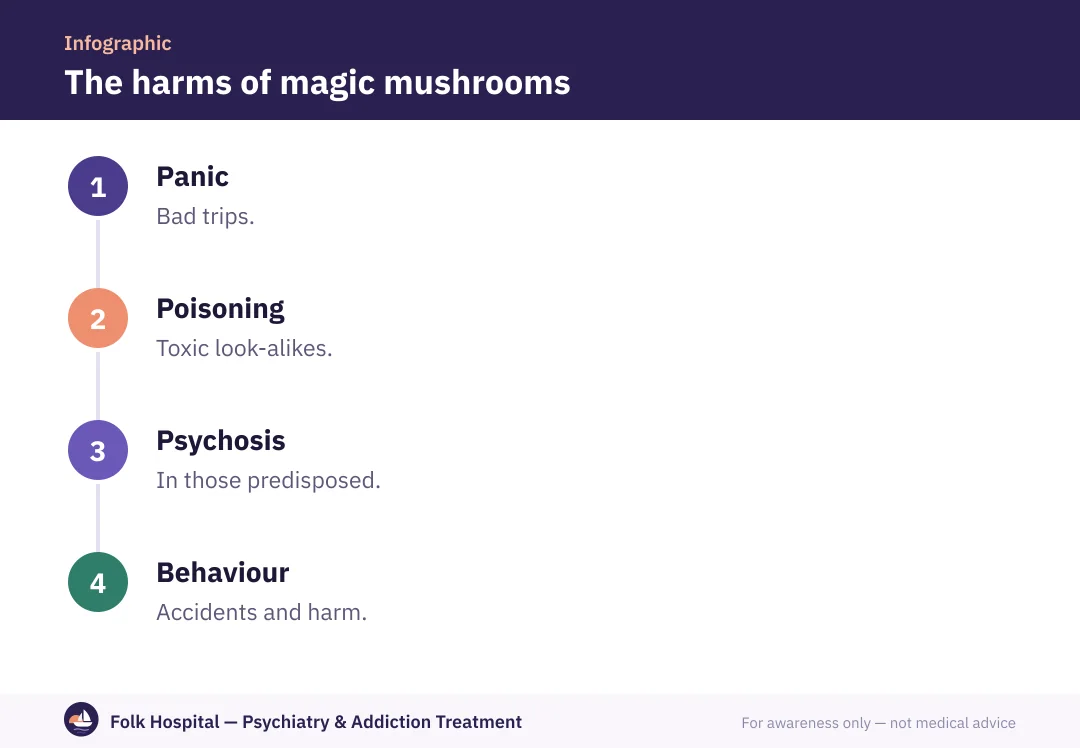
| Poisoning | Confusion with toxic mushrooms can cause liver and kidney failure |
| Safety | Accidents and risky behaviour during hallucinations |
| Mind | Panic, fear, psychosis in predisposed people, and flashbacks |
| Digestion | Nausea, vomiting and dehydration |
| Heart | Temporarily raised pulse and blood pressure |
| Interactions | Danger with some psychiatric medicines |
- Severe vomiting and diarrhoea hours later, yellowing, confusion, seizures or dangerous behaviour.
02After use
If psychological symptoms persist, seek an assessment. Read about magic mushroom symptoms, how long they stay in the body and hallucinogens.
؟Frequently asked questions
Do magic mushrooms cause lasting harm?
For most people they leave no lasting physical damage, but psychosis, flashbacks and poisoning by toxic species can leave serious effects.
How can I tell if a mushroom is toxic?
You can't be sure by appearance, so any severe vomiting and diarrhoea hours after eating wild mushrooms needs emergency care immediately.
Do magic mushrooms harm the heart?
They can temporarily raise pulse and blood pressure, which is dangerous for people with heart disease.
Do they interact with psychiatric medicines?
Yes. They can interact dangerously with some antidepressants and lithium.
Sources and references
- Psilocybin (Magic Mushrooms) — National Institute on Drug Abuse (NIDA)
- Hallucinogens — research topic — National Institute on Drug Abuse (NIDA)

A psychiatrist specialising in addiction and mental illness in adults and adolescents, with a focus on dual diagnosis.
For awareness only — not a substitute for medical advice. Editorial policy · View profile