01Symptoms
| Type | Symptoms |
|---|---|
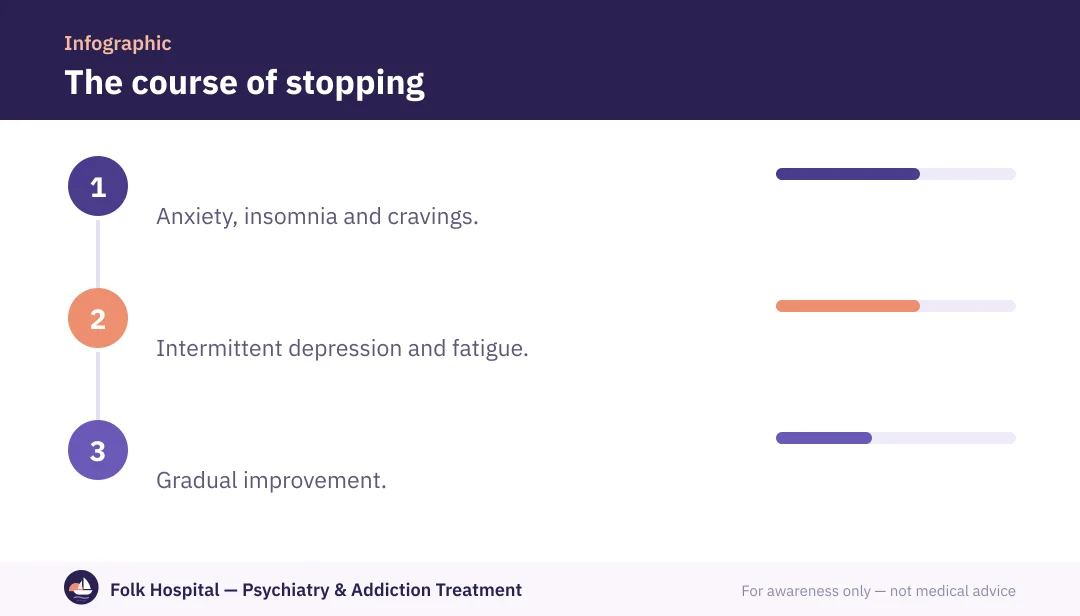
| Psychological | Intense cravings, anxiety, depression and mood swings |
| Physical | Insomnia, tiredness and sometimes tremor and sweating |
| Cognitive | Poor concentration and memory problems |
02What helps?
- A medical assessmentincluding bladder, kidneys and memory.
- Psychological supportCBT and relapse prevention.
- Treating depression and anxietyif they appear or persist.
- Organising sleep and routineto reduce idleness and triggers.
- Staying away from places of useand friends linked to them.
- Severe abdominal pain, blood in the urine, or suicidal thoughts: ambulance 123 or the mental health hotline 08008880700.
Read about ketamine addiction treatment, the symptoms of ketamine use and its harms.
؟Frequently asked questions
Is ketamine withdrawal physically dangerous?
Usually not, but depression and strong cravings can be hard and need support.
Does ketamine cause addiction?
Yes. It can cause strong psychological dependence with repeated use, and tolerance that drives higher doses.
What's the link between ketamine and the bladder?
Long-term use can cause bladder inflammation and damage, with pain, frequent urination and blood in the urine, which needs urgent assessment.
Isn't ketamine a treatment for depression?
One form is used medically for specific cases of depression, under close supervision and in measured doses, which is entirely different from non-medical use.
Sources and references
- Hallucinogens — research topic — National Institute on Drug Abuse (NIDA)
- Treatment Approaches for Drug Addiction — DrugFacts — National Institute on Drug Abuse (NIDA)
- Depression — National Institute of Mental Health (NIMH)

A psychiatrist specialising in addiction and mental illness in adults and adolescents, with a focus on dual diagnosis.
For awareness only — not a substitute for medical advice. Editorial policy · View profile