01Signs
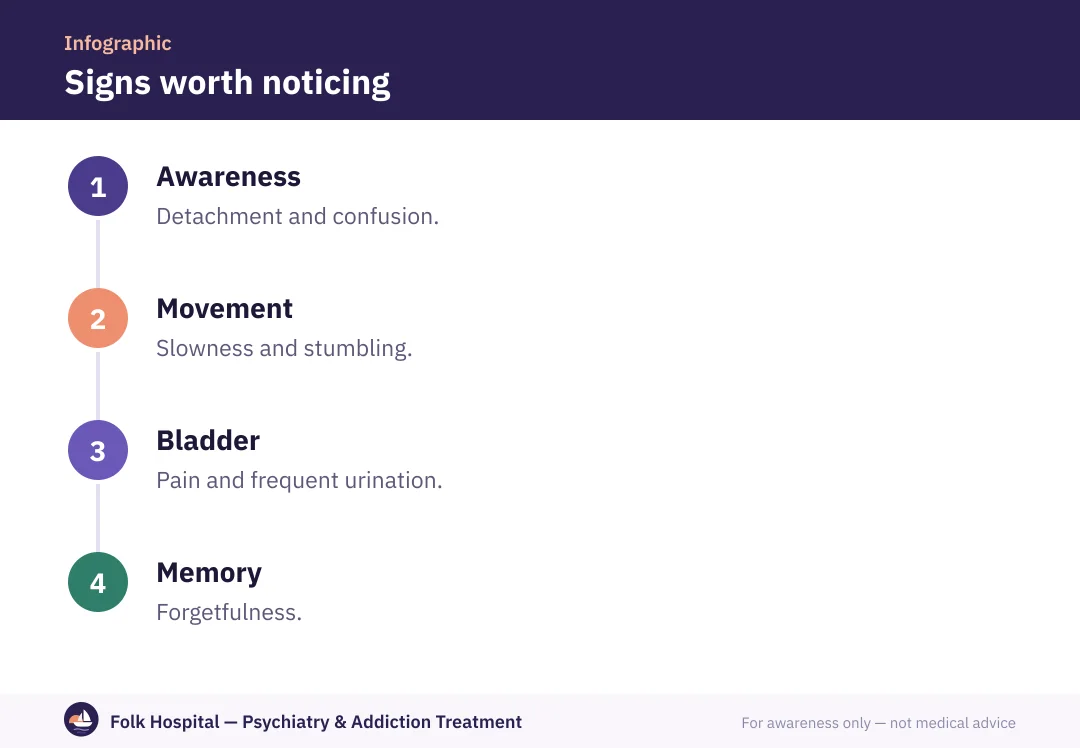
| Type | Signs |
|---|---|
| Under the effect | Detachment from body and reality, confusion, a vacant stare, slow movement and stumbling, numbness and hallucinations |
| High doses | Inability to move or speak, a coma-like state |
| With repeated use | Bladder pain, frequent urination, blood in the urine, abdominal pain and memory problems |
| Behavioural | Withdrawal, slipping at work or school, and strong cravings |
02Danger signs
- Unresponsiveness or slow breathing.
- Vomiting with unconsciousness.
- Severe abdominal pain or blood in the urine.
- Injury or an accident while under the effect.
03What should you do?
Don't leave them alone while under the effect, and keep them somewhere safe. Afterwards, seek a medical assessment that includes the bladder. Read about ketamine withdrawal, its treatment and its harms.
؟Frequently asked questions
My son complains of bladder pain and frequent urination. Could it be drugs?
It may be linked to ketamine use if it comes with other signs. It needs a medical assessment and a calm conversation.
What does «K-hole» mean?
A common term for severe detachment at high doses, when a person loses the sense of their body and the ability to move or speak.
Are there signs of ketamine at home?
You may find white powder, snorting tools or small vials, along with changes in behaviour and sleep.
Is bladder damage permanent?
It may improve with early stopping, but can become permanent with long use. That's why early assessment matters.
Sources and references
- Ketamine — National Institute on Drug Abuse (NIDA)
- Hallucinogens — research topic — National Institute on Drug Abuse (NIDA)

A psychiatrist specialising in addiction and mental illness in adults and adolescents, with a focus on dual diagnosis.
For awareness only — not a substitute for medical advice. Editorial policy · View profile