01Harms
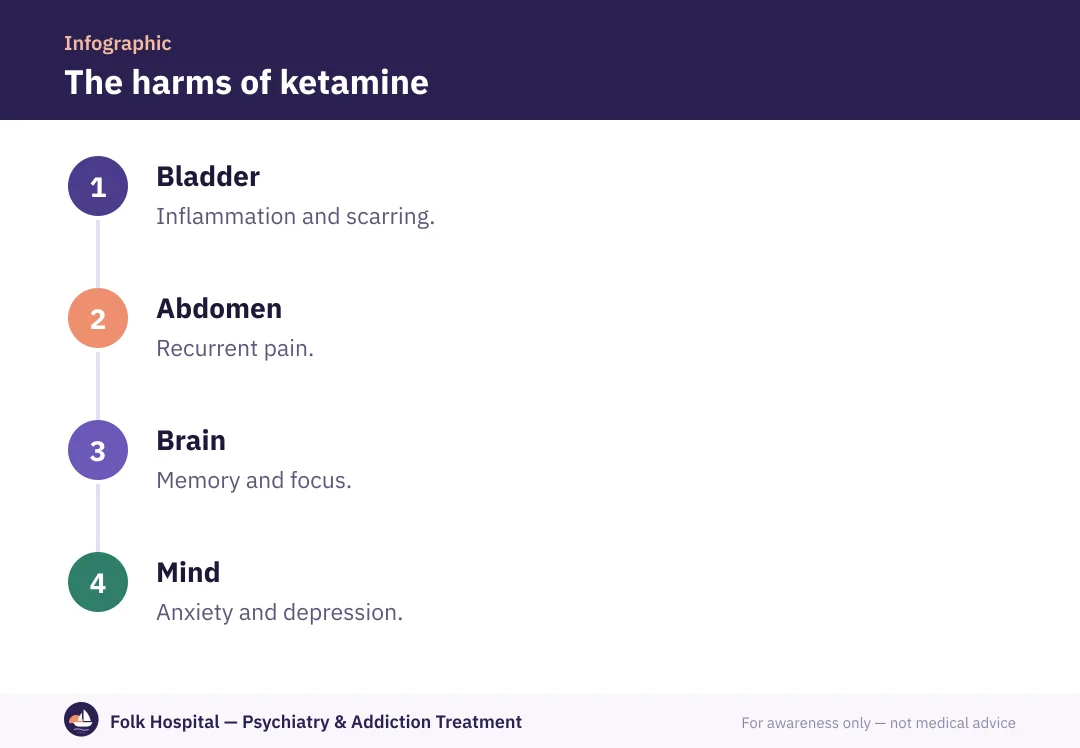
| Area | Harms |
|---|---|
| Bladder and kidneys | Bladder inflammation and damage, pain, frequent urination and blood in the urine |
| Abdomen and liver | Abdominal pain, and liver and bile duct problems |
| Brain and mind | Weak memory and concentration, depression, detachment and temporary psychosis |
| Safety | Accidents, falls and choking due to loss of control |
| Dependence | Tolerance and strong cravings |
Call an ambulance on 123 for
- Unresponsiveness, slow breathing, severe abdominal pain or blood in the urine.
What to do right nowAmbulance: 123
02Treatment
It needs a medical assessment including the bladder, and psychological therapy. Read about ketamine symptoms, its withdrawal and its treatment.
؟Frequently asked questions
Does the bladder recover after stopping ketamine?
In many cases it improves with early stopping and treatment, but advanced cases can leave permanent damage.
Can ketamine bladder damage be treated?
It may improve with early stopping, but advanced cases can need long specialist treatment and sometimes surgery.
Does ketamine harm the liver?
It can cause liver and bile duct problems with long-term use in some users.
Does ketamine have psychological harms?
Yes. It can cause detachment, temporary psychosis, depression and strong cravings with repeated use.
Sources and references
- Ketamine — National Institute on Drug Abuse (NIDA)
- Hallucinogens — research topic — National Institute on Drug Abuse (NIDA)

Written byDr. Mahmoud ElsawyConsultant in psychiatry and addiction treatment
A psychiatrist specialising in addiction and mental illness in adults and adolescents, with a focus on dual diagnosis.
For awareness only — not a substitute for medical advice. Editorial policy · View profile