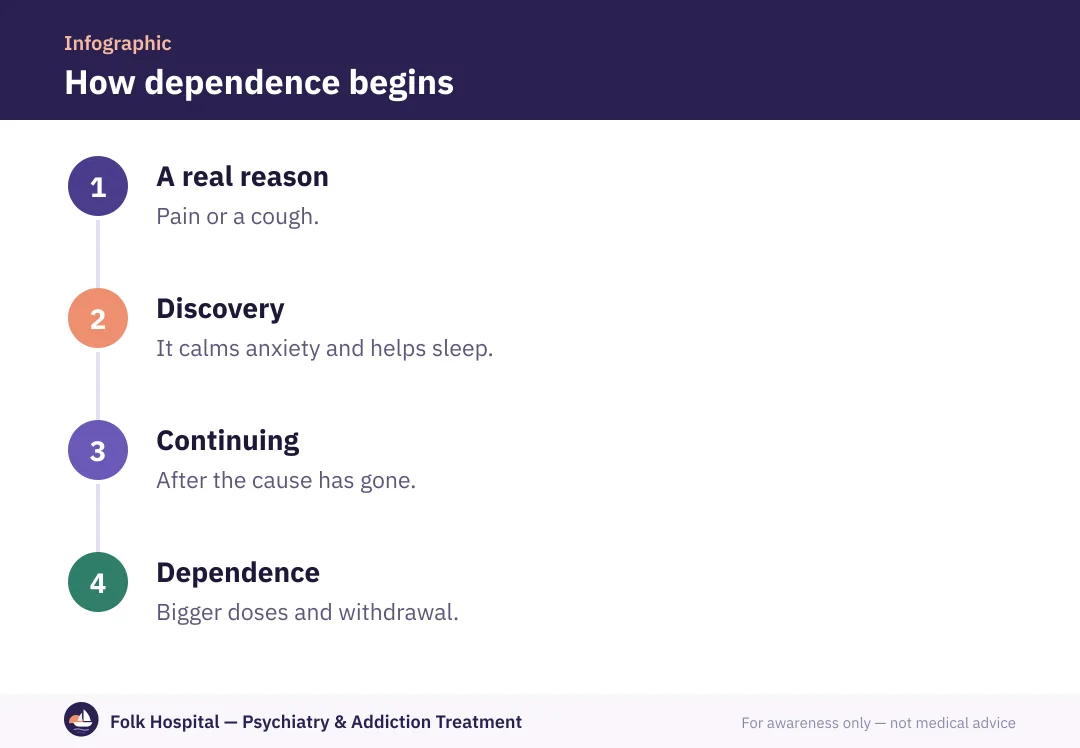
Codeine is a medicine with medical uses, but its calming effect may draw some people to continue after the cause has gone.
01Factors that raise the risk of addiction
| Factor | How it contributes |
|---|---|
| Pain or cough | A genuine medical start |
| Anxiety and insomnia | Discovering it calms and helps sleep |
| Easy access | Cough medicines and combination painkillers |
| Teenagers | Mixing cough medicine with drinks |
| Genetic predisposition | Greater sensitivity to opioids |
Having a risk factor doesn't make addiction inevitable, and lacking one doesn't guarantee protection; addiction is an illness with many causes, and it can be treated.
02How does use turn into addiction?
With repeated use tolerance develops, so the person increases the amount, then withdrawal appears on stopping, so they continue to avoid it.
03What protects?
- Treating anxiety, depression and insomnia early and safely.
- Supportive relationships and open conversation in the family.
- Healthy ways of coping with stress and pain.
- Seeking help at the first signs of losing control.
Read about codeine symptoms, its withdrawal, its treatment.
؟Frequently asked questions
I have chronic headaches and take codeine painkillers daily. What's the solution?
See a doctor to diagnose the headache type and set a preventive plan, because daily painkillers can themselves cause rebound headache and dependence.
Are cough medicines safe for teenagers?
Medicines containing codeine need great caution and should only be used with medical guidance.
How do I know use has gone beyond need?
If it continues after the cough or pain has gone, the amount increases, or irritability appears on stopping.
Sources and references
- Opioids — research topic — National Institute on Drug Abuse (NIDA)
- Prescription Medicines — research topic — National Institute on Drug Abuse (NIDA)
- Opioids — research topic — National Institute on Drug Abuse (NIDA)
- Prescription Medicines — research topic — National Institute on Drug Abuse (NIDA)

A psychiatrist specialising in addiction and mental illness in adults and adolescents, with a focus on dual diagnosis.
For awareness only — not a substitute for medical advice. Editorial policy · View profile