01Signs
| Type | Signs |
|---|---|
| Under the effect | Drowsiness, unusual calm, small pupils, slow speech and itching |
| Physical | Constipation, nausea and dry mouth |
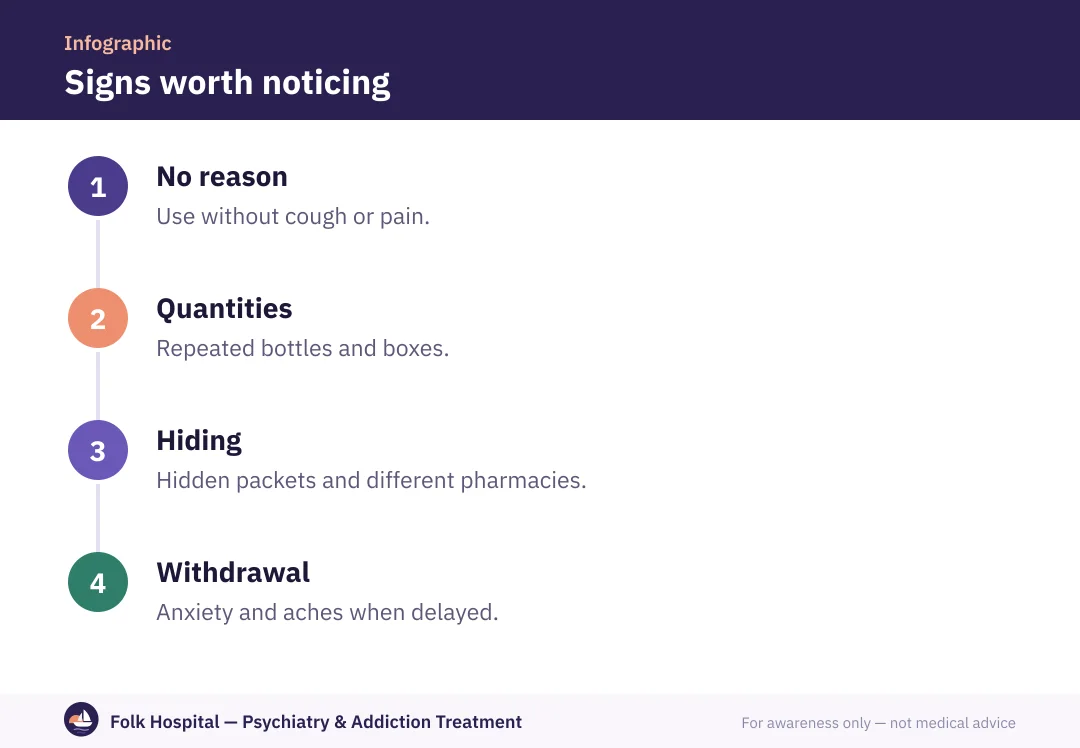
| Signs of addiction | Using it without a cough or pain, increasing the amount, and buying several bottles or packs |
| When it's missing | Irritability, insomnia, runny nose, sweating and aches |
| At home | Empty cough-medicine bottles and many painkiller packs |
02Danger signs
- Deep drowsiness or unresponsiveness.
- Slow breathing or strange snoring.
- Blue lips.
03What should you do?
Talk about the effects you notice and suggest an assessment to set a safe reduction plan. Read about codeine withdrawal, its treatment and its harms.
؟Frequently asked questions
My son drinks a lot of cough syrup even though he doesn't cough. Should I worry?
Yes, it deserves a calm conversation and a check on what the syrup contains. Some young people use it for mood, sometimes mixed with other substances.
Why do some young people drink cough medicine in large amounts?
For the calming effect of codeine, sometimes mixed with fizzy drinks. This causes dependence and can lead to overdose.
Does codeine show up in a test?
Yes, it shows as opioids in a urine test.
Is codeine more dangerous for some people?
Yes. Some people convert it quickly into larger amounts of morphine in the body, raising the risk of slowed breathing.
Sources and references
- Opioids — research topic — National Institute on Drug Abuse (NIDA)
- Prescription Medicines — research topic — National Institute on Drug Abuse (NIDA)

A psychiatrist specialising in addiction and mental illness in adults and adolescents, with a focus on dual diagnosis.
For awareness only — not a substitute for medical advice. Editorial policy · View profile