01Harms
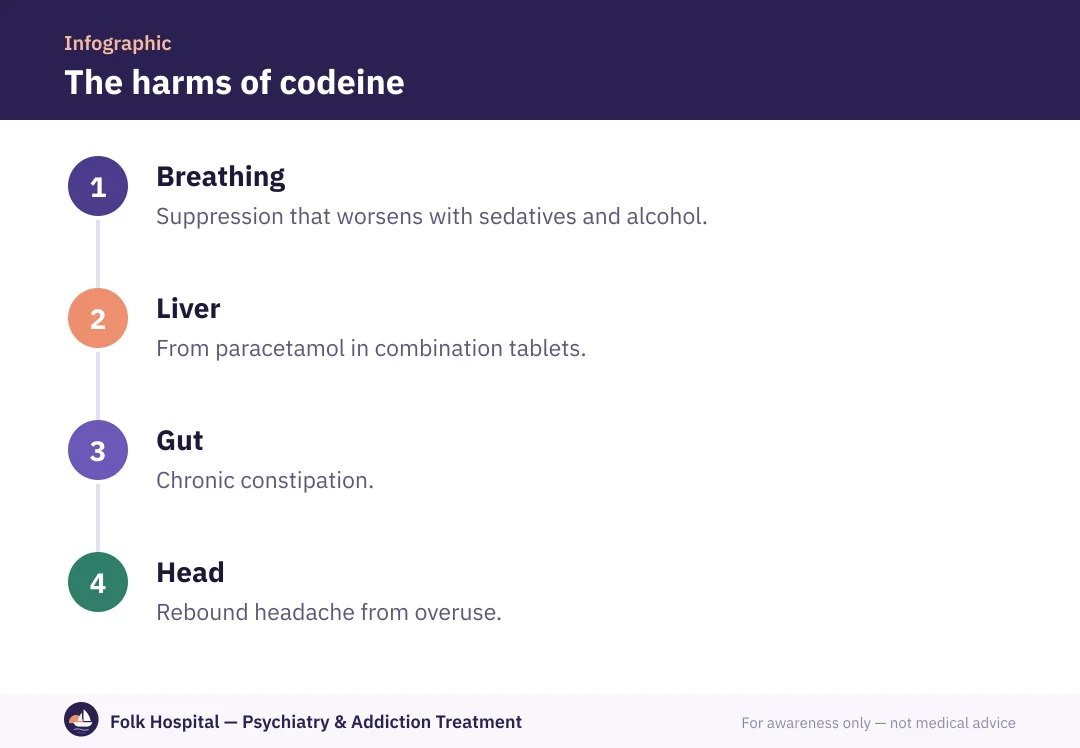
| Area | Harms |
|---|---|
| Breathing | Slowed breathing, and overdose when mixed |
| Digestion | Chronic constipation and nausea |
| Liver | Damage from high doses of combination painkillers containing paracetamol |
| Mind | Drowsiness, mood swings and depression with long-term use |
| Dependence | Tolerance and rising doses, and withdrawal on stopping |
| Hormones | Lower sex drive with long-term use |
Call an ambulance on 123 for
- Slow breathing, unresponsiveness, blue lips, or yellowing skin after large doses of combination painkillers.
What to do right nowAmbulance: 123
02Treatment
Gradual reduction under supervision and treating the original cause, such as a chronic cough or pain. Read about codeine symptoms, its withdrawal and its treatment.
؟Frequently asked questions
Is codeine safe for children?
It isn't used for young children, because some convert it into morphine fast enough to suppress breathing. A doctor decides.
Is paracetamol in combination painkillers dangerous at high doses?
Yes. Some painkillers combine codeine with paracetamol, and high doses of paracetamol can cause serious liver damage.
Does it affect breastfeeding mothers?
It can pass to the baby and cause drowsiness or slowed breathing, so consult the doctor.
Sources and references
- Opioids — research topic — National Institute on Drug Abuse (NIDA)
- Prescription Medicines — research topic — National Institute on Drug Abuse (NIDA)
- Opioid overdose — fact sheet — World Health Organization

Written byDr. Mahmoud ElsawyConsultant in psychiatry and addiction treatment
A psychiatrist specialising in addiction and mental illness in adults and adolescents, with a focus on dual diagnosis.
For awareness only — not a substitute for medical advice. Editorial policy · View profile