01Harms
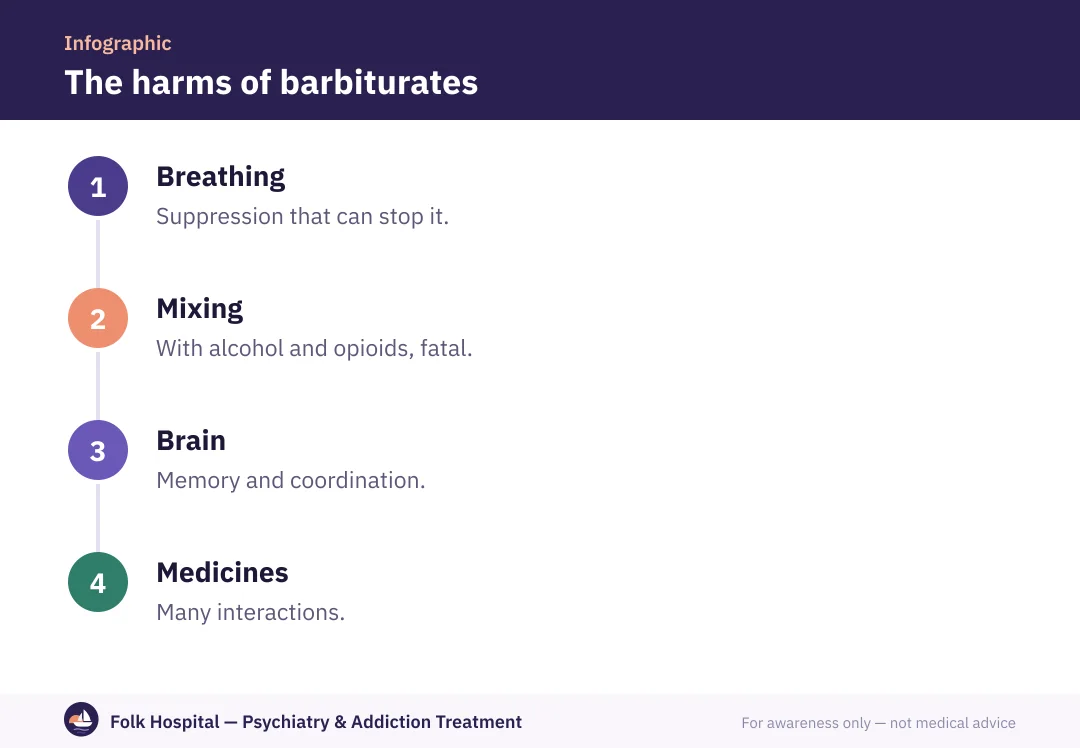
| Area | Harms |
|---|---|
| Nervous system | Drowsiness, slurred speech, unsteadiness, and weak memory and concentration |
| Breathing | Slowed breathing that can stop at high doses |
| Mind | Depression, mood swings and impulsivity |
| Dependence | Rapid tolerance and dangerous withdrawal that can cause seizures and delirium |
| Accidents | Falls and accidents from poor balance |
Overdose risk
- Unresponsiveness, slow breathing, or cold, pale skin: ambulance 123 immediately. Read about overdose.
What to do right nowAmbulance: 123
02Treatment
Stopping must be done in hospital with gradual reduction. Read about barbiturate withdrawal, prescription drug addiction and the dangers of mixing.
؟Frequently asked questions
Why are barbiturates more dangerous than modern sedatives?
Because the dose that suppresses breathing is close to the dose used, especially with tolerance or mixing.
Why has medical use of barbiturates declined?
Because of their high danger, and the arrival of safer medicines for anxiety and insomnia.
Do they affect pregnancy?
They can affect the baby and cause withdrawal symptoms in the newborn, so they aren't used without close medical supervision.
What are the signs of overdose?
Deep sleep, slow breathing, cold skin, a weak pulse and unconsciousness.
Sources and references
- Prescription Medicines — research topic — National Institute on Drug Abuse (NIDA)
- Drugs, Brains, and Behavior: The Science of Addiction — National Institute on Drug Abuse (NIDA)

Written byDr. Mahmoud ElsawyConsultant in psychiatry and addiction treatment
A psychiatrist specialising in addiction and mental illness in adults and adolescents, with a focus on dual diagnosis.
For awareness only — not a substitute for medical advice. Editorial policy · View profile