01Signs
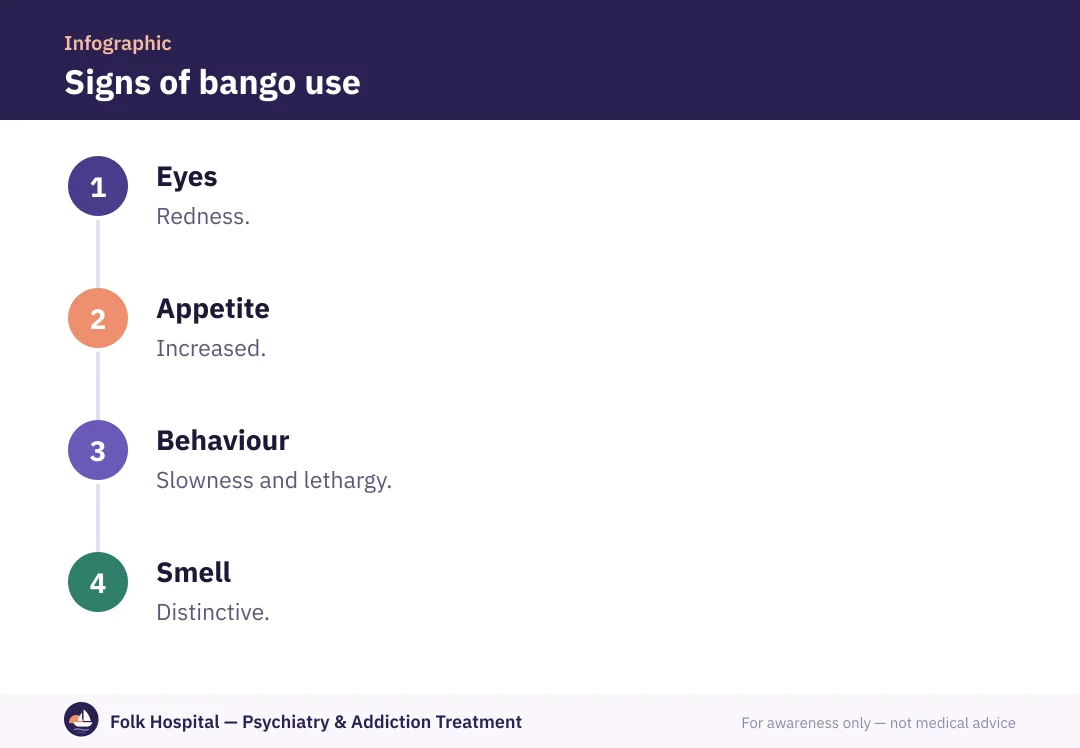
| Type | Signs |
|---|---|
| Under the effect | Red eyes, dry mouth, laughing for no reason or unusual calm, slow reactions and a distorted sense of time |
| After use | Intense hunger, especially for sweets, sleepiness and lethargy |
| With continued use | Daily use, loss of motivation, slipping at school, irritability and insomnia when it's missing |
| Signs at home | A distinctive smell, rolling papers, lighters and plant remnants |
02Signs that need urgent assessment
- Severe panic or a racing heart.
- Suspicion, hallucinations or strange speech.
- Freezing or seizures, which may mean it's mixed with a synthetic substance such as Strox.
Ambulance 123.
Ambulance: 12303What should you do?
Talk calmly about the changes you notice, suggest an assessment, and don't rely on a single sign. Read about the harms of bango, how long it stays in the body and cannabis addiction treatment.
؟Frequently asked questions
How can I tell bango from voodoo?
Bango is a plant with the smell of cannabis; voodoo is herbs sprayed with chemicals, with more violent symptoms such as freezing and panic.
What's the difference between bango and hashish?
Bango is the dried leaves and flowers of the cannabis plant, while hashish is compressed resin from the same plant. The active substance is the same but the strength differs.
Does bango cause hallucinations?
It can cause anxiety, suspicion and sometimes hallucinations, especially at strong doses, in people prone to psychosis, or if mixed with synthetic substances.
How long does bango show in a test?
Like hashish, from days to weeks depending on frequency.
Sources and references
- Cannabis (Marijuana) — research topic — National Institute on Drug Abuse (NIDA)
- Synthetic Cannabinoids (K2/Spice) DrugFacts — National Institute on Drug Abuse (NIDA)
- Drugs, Brains, and Behavior: The Science of Addiction — National Institute on Drug Abuse (NIDA)

A psychiatrist specialising in addiction and mental illness in adults and adolescents, with a focus on dual diagnosis.
For awareness only — not a substitute for medical advice. Editorial policy · View profile