01Harms
| Area | Harms |
|---|---|
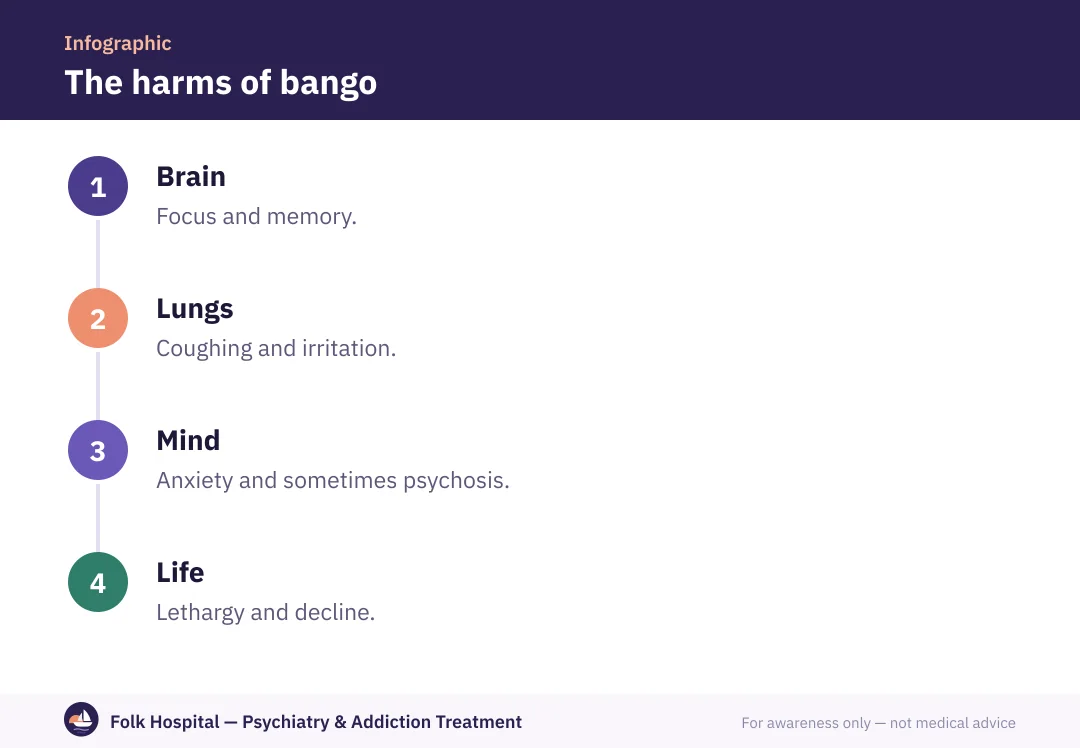
| Memory and learning | Weak short-term memory, poor concentration and slower learning |
| Mental health | Anxiety, panic, suspicion, higher psychosis risk and loss of motivation |
| Lungs | Coughing and bronchitis with repeated smoking |
| Heart | Temporarily faster heartbeat and higher blood pressure |
| Teenagers | Greater effect on the developing brain and higher risk of dependence |
02Social harms
Slipping at school, family problems, accidents when driving under the influence, and legal problems.
- Bango mixed with synthetic substances can cause seizures, freezing and severe hallucinations. For these symptoms: ambulance 123.
03Can the harms improve?
Many effects on memory, concentration and motivation improve with stopping, especially early. Read about the symptoms of bango, how long it stays in the body and cannabis addiction treatment.
؟Frequently asked questions
Is bango milder than hashish?
It's usually weaker, but it causes the same harms with continued use and may be adulterated.
Is bango less harmful than hashish?
The active substance is the same, and harm depends on strength, frequency and age. Adulterated bango can be far more dangerous.
Does bango affect studying?
Yes. It weakens memory, concentration and motivation, often leading to slipping at school with regular use.
Does bango cause addiction?
Yes. A proportion of users develop dependence, more so with early starting and daily use.
Sources and references
- Cannabis (Marijuana) — research topic — National Institute on Drug Abuse (NIDA)
- Synthetic Cannabinoids (K2/Spice) DrugFacts — National Institute on Drug Abuse (NIDA)
- Drugs, Brains, and Behavior: The Science of Addiction — National Institute on Drug Abuse (NIDA)

A psychiatrist specialising in addiction and mental illness in adults and adolescents, with a focus on dual diagnosis.
For awareness only — not a substitute for medical advice. Editorial policy · View profile