01Cortisol through the stages
| Stage | Cortisol state |
|---|---|
| Use | Disrupted |
| Withdrawal | Raised |
| Early recovery | Unstable |
| Stable recovery | Gradual balance |
02The cycle
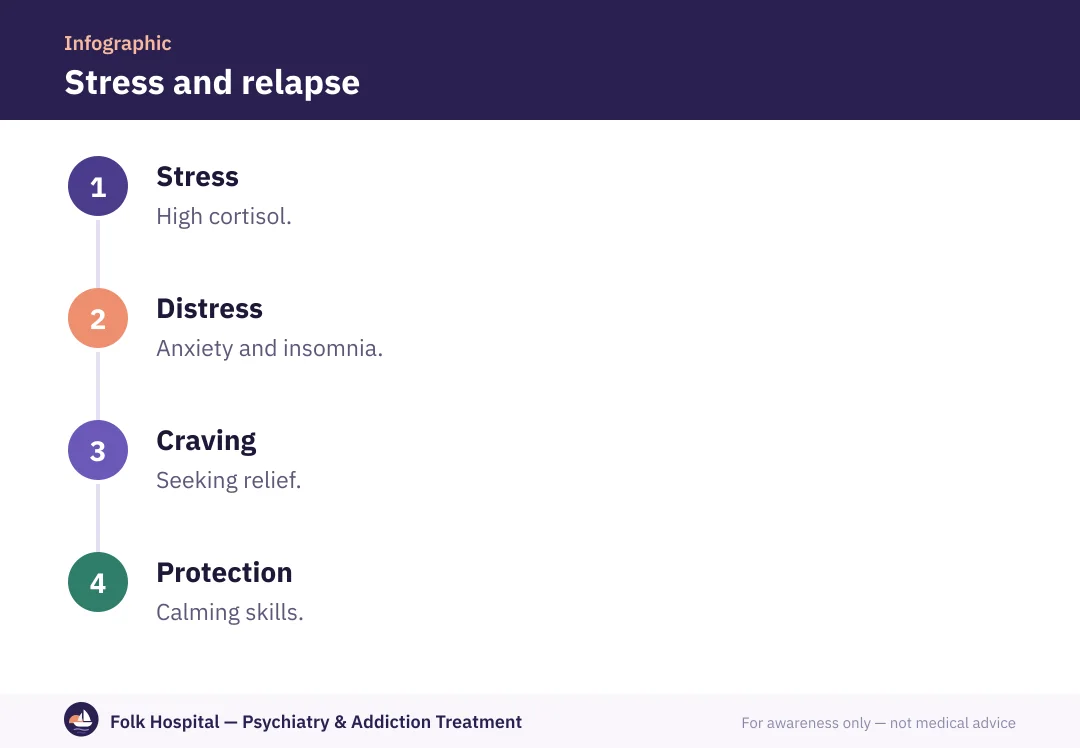
- Stressraises cortisol.
- Usefor brief relief.
- Disruptionof the stress system.
- Withdrawalanxiety and craving.
- Relapseif stress isn't managed.
Read also: cortisol, relapse prevention, stress.
؟Frequently asked questions
How is cortisol linked to addiction?
Stress drives use, and use and withdrawal disrupt the stress system.
Why do I crave when stressed?
The brain has learned the substance relieves stress briefly.
Does withdrawal raise cortisol?
Yes, increasing anxiety and insomnia.
Does the stress system recover?
Yes, gradually with abstinence and treatment.
How do I manage stress in recovery?
Sleep, exercise, breathing, support and avoiding triggers.
Do medicines help?
Some ease withdrawal and anxiety under supervision.
Sources and references
- Cortisol — Cleveland Clinic
- Stress — questions and answers — World Health Organization
- Drugs, Brains, and Behavior: The Science of Addiction — National Institute on Drug Abuse (NIDA)

Written byDr. Mahmoud ElsawyConsultant in psychiatry and addiction treatment
A psychiatrist specialising in addiction and mental illness in adults and adolescents, with a focus on dual diagnosis.
For awareness only — not a substitute for medical advice. Editorial policy · View profile